


| Country | Iraq |
| Population | 711530 |
| Area | 42.4 km2 (16.4 sq mi) |
| Time Zone | UTC+3 (Arabian Standard Time) |
| Coordinates | 32.61666666666667, 44.03333333333333 |
| Highest elevation | 28 m (92 ft) |
City Gallery




City Description
Karbala, one of the holiest cities in Iraq, holds a special place in the hearts of millions of Muslims around the world, particularly for Shia Muslims. Located about 100 kilometers southwest of Baghdad, Karbala is steeped in rich history, deep spirituality, and enduring resilience. With a population estimated at over 1 million people, the city is a significant religious, cultural, and economic hub in Iraq.
Karbala’s history is dominated by its association with the Battle of Karbala, which took place on October 10, 680 AD (10th of Muharram in the year 61 AH). This battle was a defining moment in Islamic history, where Imam Hussein, the grandson of the Prophet Muhammad, was martyred along with his family and companions. Imam Hussein’s refusal to submit to the rule of Yazid, the Umayyad caliph, became a symbol of resistance against tyranny. His martyrdom turned Karbala into one of the most important pilgrimage sites in the Islamic world, second only to Mecca and Medina for Shia Muslims. Every year, millions of pilgrims from Iraq, Iran, Pakistan, Lebanon, and beyond visit Karbala to commemorate Ashura and Arbaeen, marking the martyrdom of Imam Hussein. In fact, the Arbaeen pilgrimage is one of the largest annual gatherings in the world, drawing over 20 million pilgrims.
Geographically, Karbala is located in a relatively flat area in central Iraq, part of the Mesopotamian plain. The Euphrates River flows near the city, providing water for agriculture, which has traditionally been one of the key economic activities in the region. The climate is typical of the desert, with scorching hot summers where temperatures can exceed 45°C (113°F) and milder winters that average around 15°C (59°F). The city receives very little rainfall throughout the year, which has always been a challenge for agriculture and water supply.
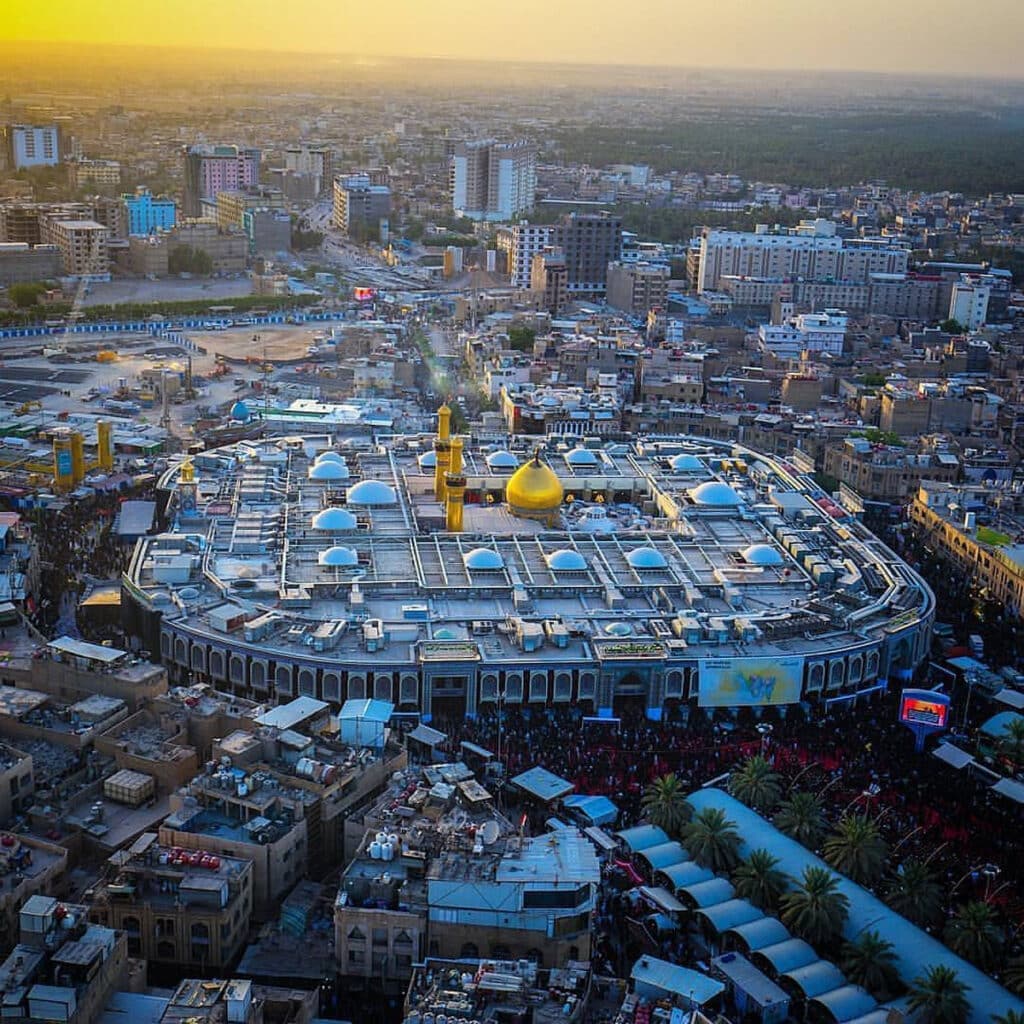
Karbala’s urban landscape is defined by its spiritual landmarks, particularly the twin shrines of Imam Hussein and his brother, Abbas ibn Ali. The Shrine of Imam Hussein, with its golden dome and towering minarets, is the centerpiece of the city, drawing millions of visitors annually. The nearby Shrine of Abbas is equally magnificent, symbolizing the loyalty and bravery of Abbas, who sacrificed his life to fetch water for Imam Hussein’s thirsty followers during the Battle of Karbala. These shrines are surrounded by bustling markets, hotels, and pilgrim accommodations, creating a vibrant atmosphere filled with devotion, especially during the peak pilgrimage seasons.
Culturally, Karbala is deeply rooted in Islamic traditions, with a focus on religious education, poetry, and rituals that commemorate the events of Ashura. The city is known for its public recitations, mourning processions, and the traditional passion plays known as “ta’ziya,” which reenact the events of the Battle of Karbala. These cultural practices are not only a way to preserve history but also serve as a source of unity and identity for the community. The culture of Karbala is heavily influenced by the presence of pilgrims, and the hospitality extended to visitors is a point of pride for locals. It’s common for residents to open their homes to pilgrims, especially during the Arbaeen pilgrimage when the city’s infrastructure is pushed to its limits.
The city’s economy is heavily reliant on religious tourism, which is the lifeblood of Karbala. The influx of millions of pilgrims each year has spurred the growth of the hospitality industry, including hotels, restaurants, and transport services. The local markets are filled with religious items like prayer beads, black flags, and traditional clothing, catering to the needs of pilgrims. In recent years, there has been an effort to diversify the local economy, but religious tourism remains the most significant source of income.
Beyond tourism, agriculture is another important sector in Karbala’s economy. The fertile lands along the Euphrates River are used to grow crops like wheat, barley, dates, and vegetables. The date palm groves around Karbala are particularly famous, with dates being one of Iraq’s most prized exports. However, the agricultural sector faces challenges due to water scarcity and soil salinity, which have been exacerbated by climate change and upstream water usage in neighboring countries.
In terms of human resources, Karbala is home to a resilient and industrious population. The city has several universities and religious schools, with the University of Karbala being a major educational institution offering degrees in fields such as medicine, engineering, and the humanities. The presence of numerous seminaries (“hawzas”) also means that Karbala is a center for Islamic learning, attracting students from all over the Shia Muslim world who come to study theology, jurisprudence, and philosophy. This blend of secular and religious education contributes to a diverse and well-rounded workforce.
Despite its religious significance and economic potential, Karbala faces significant challenges. The city has been affected by decades of conflict, sanctions, and political instability, which have taken a toll on its infrastructure and development. Although security has improved in recent years, there are still concerns about maintaining stability, particularly during large gatherings like Ashura and Arbaeen, which are high-profile events that have, in the past, been targeted by extremist groups. Additionally, the city grapples with issues such as waste management, traffic congestion, and inadequate public services, especially during the pilgrimage seasons when the population swells dramatically.
Efforts to modernize Karbala are ongoing. The local government, in cooperation with national authorities, has been working to improve roads, expand public transport, and upgrade utilities to meet the growing needs of residents and visitors. Investments in infrastructure, particularly in water and energy, are critical as the city seeks to enhance its resilience against environmental challenges. Projects to develop the Karbala International Airport aim to make the city more accessible to international pilgrims, potentially boosting the local economy further.
The people of Karbala are known for their deep sense of community and hospitality. The local cuisine is a reflection of this warm, communal spirit, with dishes that are both hearty and flavorful. Popular foods include “qeema,” a dish made of minced meat and lentils traditionally served during Ashura, and “masgouf,” a grilled fish dish that is a staple in the region. The city’s markets are filled with spices, dried fruits, and sweets, catering to the tastes of both locals and pilgrims. Street vendors serve traditional snacks like “samosas” and “falafel,” adding to the vibrant atmosphere of the city’s streets.
In summary, Karbala is a city that balances its ancient heritage with the challenges and opportunities of the modern world. Its significance as a religious center cannot be overstated, as it continues to be a beacon for millions of Shia Muslims worldwide. The city’s economy is closely tied to its spiritual importance, but there are efforts to diversify and modernize its infrastructure to support sustainable growth. Despite the challenges it faces, Karbala remains a resilient city with a strong sense of identity and an enduring spirit of hospitality, making it a unique and cherished place in the heart of Iraq.
Leave a Reply