

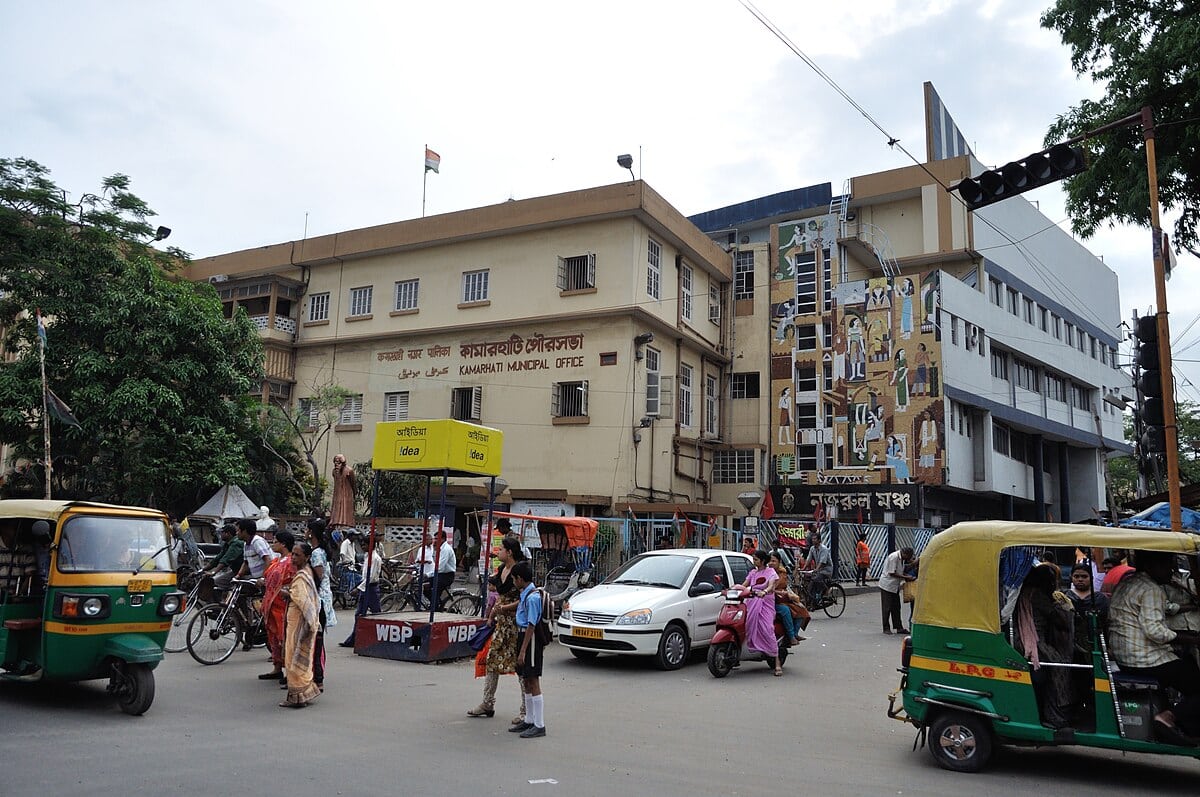
| Country | India |
| Population | 330211 |
| Area | 10.96 km2 (4.23 sq mi) |
| Time Zone | UTC+5:30 (IST) |
| Coordinates | 22.66862, 88.3704 |
| Highest elevation | 15 m (49 ft) |
City Gallery




City Description
Kamarhati, India, is a lively industrial town located on the banks of the Hooghly River, just north of Kolkata, in the Indian state of West Bengal. Part of the North 24 Parganas district, Kamarhati has a population of around 330,000, making it one of the densely populated suburban areas near Kolkata. It covers an area of roughly 11 square kilometers and serves as a vital industrial and residential hub in the Kolkata Metropolitan Area. Despite its proximity to Kolkata, Kamarhati has developed a distinct identity of its own, blending industrial growth with cultural heritage and a rich sense of community.
Historically, Kamarhati has roots dating back to the colonial era, with the East India Company using the Hooghly River as a trade route, transforming the surrounding region into a bustling trade zone. The city grew rapidly in the 19th century, particularly with the establishment of jute mills along the river. The Hooghly became a center of industrial activity, with jute, textiles, and small manufacturing plants creating job opportunities that drew people from various parts of Bengal. The Kamarhati Jute Mill, one of the oldest in India, was established in 1873 and marked the beginning of a period of growth and economic development that shaped Kamarhati’s identity. Over the decades, the town expanded as workers from across Bengal and neighboring states settled here, creating a diverse, multicultural community.
Geographically, Kamarhati is part of the Ganges Delta region, which has fertile land and numerous water channels fed by the Hooghly River. The city experiences a tropical climate, with hot summers reaching up to 38°C, a humid monsoon season from June to September, and mild winters, with temperatures averaging around 15-20°C. The Hooghly River, which flows along the western edge of Kamarhati, not only provides water for industrial and domestic use but also serves as a scenic spot for locals who gather by its banks to relax, socialize, and enjoy the riverside ambiance. The river also connects the city to the broader Kolkata region, with ferry services that transport passengers across its waters.
Culturally, Kamarhati is a microcosm of Bengali tradition and vibrancy, with a blend of Hindu, Muslim, and Christian communities coexisting and celebrating their respective festivals with enthusiasm. Durga Puja is the highlight of the year, with elaborate pandals (temporary structures for worship) and celebrations that fill the streets with music, lights, and color. Kali Puja and Eid are also widely celebrated, bringing the community together in a spirit of unity and joy. Kamarhati is known for its traditional Bengali food, with fish, rice, and sweets being staples in the local diet. Street food stalls serving delicacies like “phuchka” (pani puri), “jhal muri” (spicy puffed rice), and “ghugni” (curried peas) are popular hangouts for residents and visitors alike. The town’s markets are bustling, especially the Kamarhati Bazaar, where vendors sell everything from fresh produce and fish to clothing and household items.
The people of Kamarhati, known for their resilience and warmth, are a mix of local Bengalis and migrants who came here for work over the years. Many residents are employed in industries like jute, textiles, and manufacturing, while others work in the service sector, education, and small businesses. The town’s proximity to Kolkata means that a significant number of people commute to the city for work, especially in fields like healthcare, IT, and finance. Education is valued in Kamarhati, with a number of primary and secondary schools serving the community, along with a few colleges. Institutions like Kamarhati’s Rabindra Bharati University branch offer courses that focus on the arts and humanities, supporting the development of a well-rounded workforce.
Economically, Kamarhati’s economy has traditionally been rooted in its jute industry, with the Kamarhati Jute Mill being a key player in the local economy. While the jute industry has faced challenges in recent years due to shifts in global demand and competition from synthetic materials, it still provides employment to many locals. In addition to jute, small and medium manufacturing enterprises have taken root in Kamarhati, producing goods such as textiles, rubber, and chemicals. The service sector, particularly retail and transport, has also grown, with local businesses thriving due to the city’s strategic location near Kolkata. Many residents run small shops, restaurants, and services that cater to the everyday needs of the community, contributing to the informal economy that is essential to Kamarhati’s financial stability.
Transportation in Kamarhati is well-integrated with the Kolkata Metropolitan Area, providing easy access to the capital’s amenities and opportunities. The town is connected by road through BT Road (Barrackpore Trunk Road), a major highway that runs north-south and links Kamarhati to Kolkata and other suburban towns. The Sealdah-Ranaghat rail line passes nearby, with the Belghoria railway station serving Kamarhati residents who commute to Kolkata and surrounding areas. Public transportation options include buses, auto-rickshaws, and shared vans, while the local ferry services across the Hooghly provide a scenic and convenient route to Kolkata. The Kolkata Metro is gradually expanding its reach, and once completed, it will offer additional connectivity to Kamarhati.
Housing in Kamarhati is diverse, with options ranging from traditional single-story houses in older neighborhoods to multi-story apartment buildings that have sprung up in recent years. Housing costs are generally affordable compared to central Kolkata, making it a popular choice for families and working professionals. Many of the older homes have the distinct architecture of colonial-era Bengal, with tiled roofs, high ceilings, and courtyard spaces, adding a sense of history and character to the town. The more modern residential complexes offer amenities like gated security, parking, and access to parks, catering to the needs of an evolving urban population. The cost of living in Kamarhati is relatively low, with affordable food, transportation, and healthcare options, contributing to a high quality of life for residents.
Entertainment and recreation in Kamarhati are largely centered around local parks, the riverfront, and cultural events. The banks of the Hooghly are a favorite gathering spot, especially in the evenings when people come to relax, enjoy the view, and catch the cool river breeze. Cultural programs, particularly during festival seasons, bring the community together, with local clubs organizing events, music, and dance performances that showcase Bengali arts. Kamarhati’s proximity to Kolkata also means that residents can easily access the capital’s theaters, museums, and shopping malls for entertainment. For sports enthusiasts, cricket and football are popular, and many local clubs and fields host regular games that draw enthusiastic crowds.
In recent years, Kamarhati has focused on improving infrastructure and services to support its growing population. The local government has implemented projects aimed at road maintenance, waste management, and clean water supply, improving the quality of life for residents. There is also an emphasis on education and healthcare, with new schools and clinics opening to meet community needs. Environmental awareness has been growing, and initiatives like tree-planting campaigns and cleanup drives along the Hooghly River are being promoted to enhance the town’s green spaces and promote a cleaner environment.
Overall, Kamarhati is a place where tradition and modernity meet. Its industrial roots, combined with a strong sense of community, create a unique urban environment that feels both dynamic and rooted in heritage. With its riverside charm, thriving markets, and close-knit neighborhoods, Kamarhati offers a glimpse into everyday life in suburban Bengal. Whether you’re exploring its bustling bazaar, taking a ferry ride on the Hooghly, or enjoying a local festival, Kamarhati is a town with a rich history, hardworking people, and a spirit that’s distinctly Bengali. It’s a place that continues to grow and adapt, welcoming change while staying true to its roots, making it a vibrant part of the greater Kolkata area.
Leave a Reply