

| Country | Sweden |
| Population | 362133 |
| Area | 332.6 km2 (128.4 sq mi) |
| Time Zone | UTC+1 (CET) |
| Coordinates | 55.60583333333334, 13.035833333333333 |
| Highest elevation | 12 m (39 ft) |
City Gallery




City Description
Malmö, the third-largest city in Sweden, is a vibrant and dynamic place known for its mix of historical charm, innovative architecture, and multicultural vibe. Situated in southern Sweden’s Skåne County, Malmö has a population of around 350,000 within the city and about 700,000 in the wider metropolitan area. As part of the Öresund region, Malmö is linked to Denmark by the iconic Öresund Bridge, providing easy access to Copenhagen and making it a hub for international business and tourism. From its picturesque medieval squares to the modern waterfront neighborhoods, Malmö is a city that harmoniously combines tradition with forward-thinking urban development.
Malmö’s history goes back to the 13th century, when it was originally a part of Denmark and served as an important port for the herring trade. It officially became a city in 1353 and was one of the most fortified cities in Scandinavia during the Middle Ages. Malmö changed hands in 1658 after the Treaty of Roskilde, becoming a part of Sweden. For centuries, it remained a vital port and industrial center, with shipbuilding being a key industry until the 20th century. The city saw significant economic shifts in the late 1900s, as traditional industries declined, leading Malmö to transform into a city of education, technology, and culture. Today, the city is known for its sustainability initiatives and as a thriving urban center within the Öresund region.
Geographically, Malmö sits on the southwest coast of Sweden, bordering the Baltic Sea and just 8 kilometers from Copenhagen across the Öresund Strait. The city covers an area of about 77 square kilometers and is known for its flat landscape, which makes it ideal for cycling, a popular mode of transport here. Malmö’s location by the sea and its mild maritime climate result in cool summers and relatively mild winters compared to the rest of Sweden. Average summer temperatures reach around 21°C (70°F), while winter temperatures hover around 0°C (32°F). The city’s coastal location also brings strong winds and a moderate amount of rainfall throughout the year, with autumn being the wettest season. Malmö’s natural surroundings include scenic beaches, green parks, and urban gardens, providing plenty of outdoor recreational spaces.
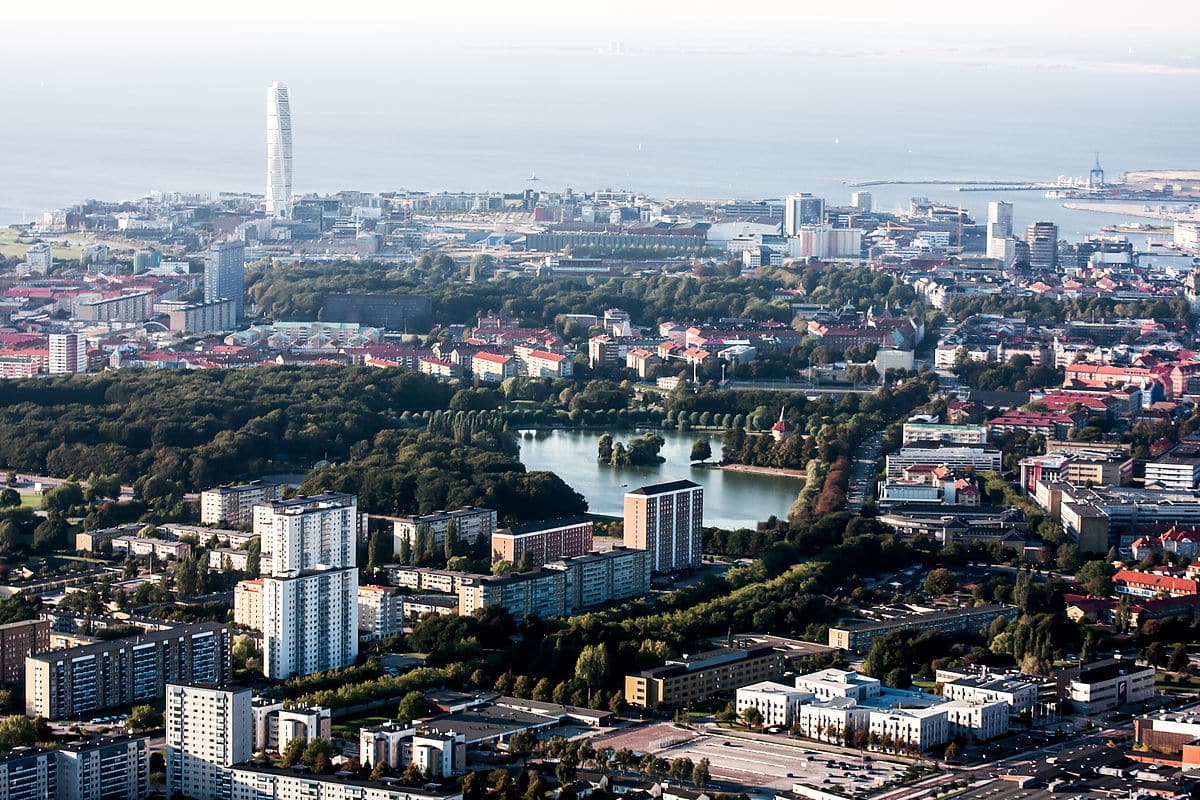
Culturally, Malmö is a melting pot, with a diverse population that reflects influences from around the world. Nearly half of Malmö’s residents have a foreign background, creating a rich multicultural community with a variety of languages, cuisines, and traditions. The city celebrates this diversity with festivals and events, such as the Malmö Festival, an annual week-long celebration of music, food, art, and dance that brings together locals and visitors for concerts, street food, and cultural performances. The city is also known for its art and architecture, with landmarks like the Turning Torso, a twisting skyscraper designed by Santiago Calatrava, standing as a symbol of Malmö’s modern transformation. Museums like Moderna Museet Malmö and Malmöhus Castle showcase contemporary art and historical artifacts, respectively, offering insight into the city’s artistic legacy and cultural evolution.
Education in Malmö is robust, with institutions that serve both Swedish and international students. Malmö University, established in 1998, is a relatively young but respected university that has grown rapidly and now hosts around 24,000 students. The university offers a range of programs in fields such as technology, health, social sciences, and arts, with a focus on interdisciplinary studies and innovation. The International School of Malmö caters to expatriate families, offering the International Baccalaureate (IB) program, while public and private primary and secondary schools serve the local population. Education in Malmö emphasizes inclusivity and sustainability, reflecting the city’s commitment to social equity and environmental consciousness. Vocational schools and training centers in Malmö also provide practical skills training, particularly in the fields of construction, healthcare, and information technology, aligning with local industry needs.
The economy of Malmö is diverse and forward-looking, with major sectors in technology, logistics, finance, and green energy. The city is home to a number of tech companies and startups, many of which are housed in the MINC incubator and Malmö’s own Media Evolution City, a digital and creative hub that supports entrepreneurs. The Øresund Bridge has strengthened Malmö’s position as a logistics and transportation center, facilitating trade and travel between Sweden and Denmark. The city’s retail sector is robust, with shopping centers like Emporia, one of Scandinavia’s largest malls, and the bustling pedestrian streets around Gustav Adolfs Torg, where visitors can find everything from international brands to local boutiques. Malmö has also become a pioneer in sustainability, with initiatives focused on renewable energy, waste reduction, and green architecture, supported by local government policies that promote eco-friendly business practices.
Infrastructure in Malmö is highly developed, with a modern transport network that supports the city’s growth and connectivity. Malmö Central Station, the largest train station in Skåne County, connects the city to Copenhagen, Stockholm, and other major cities in Sweden and Europe. Public transportation within Malmö is efficient and includes buses and commuter trains, while bike lanes make cycling a popular and accessible choice. The city’s location near Malmö Airport and Copenhagen Airport further enhances its international connectivity. In line with Malmö’s commitment to sustainability, the city has implemented eco-friendly infrastructure, including electric buses, green roofs, and the Western Harbor development, which is entirely powered by renewable energy sources. Malmö’s healthcare system is strong, with several hospitals and medical centers, including Skåne University Hospital, which provides specialized healthcare services and contributes to medical research.
The people of Malmö are known for their openness, creativity, and community spirit. The city’s population is a mix of Swedes and immigrants from across the world, contributing to a multicultural environment where different languages and traditions are celebrated. Malmö residents are environmentally conscious and socially progressive, reflecting the city’s values of inclusivity and sustainability. The people of Malmö are also active in community life, participating in cultural events, volunteer projects, and neighborhood associations that foster a sense of belonging. Swedish and English are widely spoken, and the city’s young, diverse population contributes to its vibrant atmosphere, with cafes, coworking spaces, and cultural venues bustling with activity.
Quality of life in Malmö is high, with a strong emphasis on work-life balance, green spaces, and social welfare. Housing options range from historic apartments in Gamla Staden (Old Town) to modern eco-friendly developments in areas like Västra Hamnen (Western Harbor), known for its sustainable architecture and beautiful waterfront views. While housing prices have risen with the city’s growth, Malmö remains more affordable than Stockholm or Copenhagen, making it an attractive option for young professionals and families. The city’s parks, such as Kungsparken and Pildammsparken, provide recreational spaces for residents to relax, exercise, and socialize. Malmö’s healthcare, public transportation, and social services contribute to a high standard of living, while cultural venues, cafes, and restaurants add to the city’s appeal for those who enjoy an active and socially connected lifestyle.
Shopping and dining in Malmö reflect the city’s cosmopolitan culture, offering a blend of international flavors and local specialties. The city’s central shopping areas, like Södergatan and Davidshall, feature a mix of high-street brands, indie boutiques, and vintage stores, while Emporia Mall provides a more extensive shopping experience. Malmö’s culinary scene is as diverse as its population, with restaurants serving cuisines from all over the world, including Middle Eastern, East Asian, Italian, and Swedish. Local specialties, such as *kanelbullar* (cinnamon buns) and traditional Swedish meatballs, can be found in cafes and eateries throughout the city. The sustainable food movement is strong in Malmö, with many restaurants and markets emphasizing organic, locally sourced ingredients. The city also has a thriving street food scene, particularly around Möllevångstorget, where residents and visitors can enjoy international flavors in a lively market setting.
Environmental sustainability is a core value in Malmö, which has become a model for green urban planning in Europe. The city has committed to becoming carbon neutral by 2030 and has implemented numerous initiatives to achieve this goal. Western Harbor, one of Malmö’s most famous neighborhoods, is an entirely eco-friendly development powered by wind, solar, and biomass energy. Malmö’s extensive cycling infrastructure, public transportation upgrades, and green spaces contribute to the city’s low carbon footprint. Recycling programs are well-established, and residents actively participate in waste reduction efforts. The city also focuses on sustainable building practices, with green roofs, energy-efficient buildings, and urban gardens integrated into the urban landscape. Environmental awareness is deeply ingrained in Malmö’s community, and both residents and businesses are encouraged to adopt eco-friendly practices.
Malmö is a city that blends old-world charm with modern innovation, offering a lifestyle that embraces both sustainability and cultural diversity. From its historic squares and medieval castle to its thriving tech industry and eco-friendly neighborhoods, Malmö has something for everyone. For residents, it’s a place of community and creativity, where work, leisure, and environmental responsibility go hand in hand. For visitors, Malmö is an introduction to Sweden’s progressive spirit, with beautiful parks, iconic architecture, and a unique mix of global cultures. Whether you’re exploring the cobbled streets of Gamla Staden, cycling along the waterfront in Västra Hamnen, or enjoying a meal at one of the city’s international eateries, Malmö captures the best of Swedish living in a city that’s always looking toward the future.
Leave a Reply