

| Country | Germany |
| Population | 322904 |
| Area | 302.89 km2 (116.95 sq mi) |
| Time Zone | UTC+01:00 (CET) |
| Coordinates | 51.962500000000006, 7.625555555555556 |
| Highest elevation | 60 m (200 ft) |
City Gallery




City Description
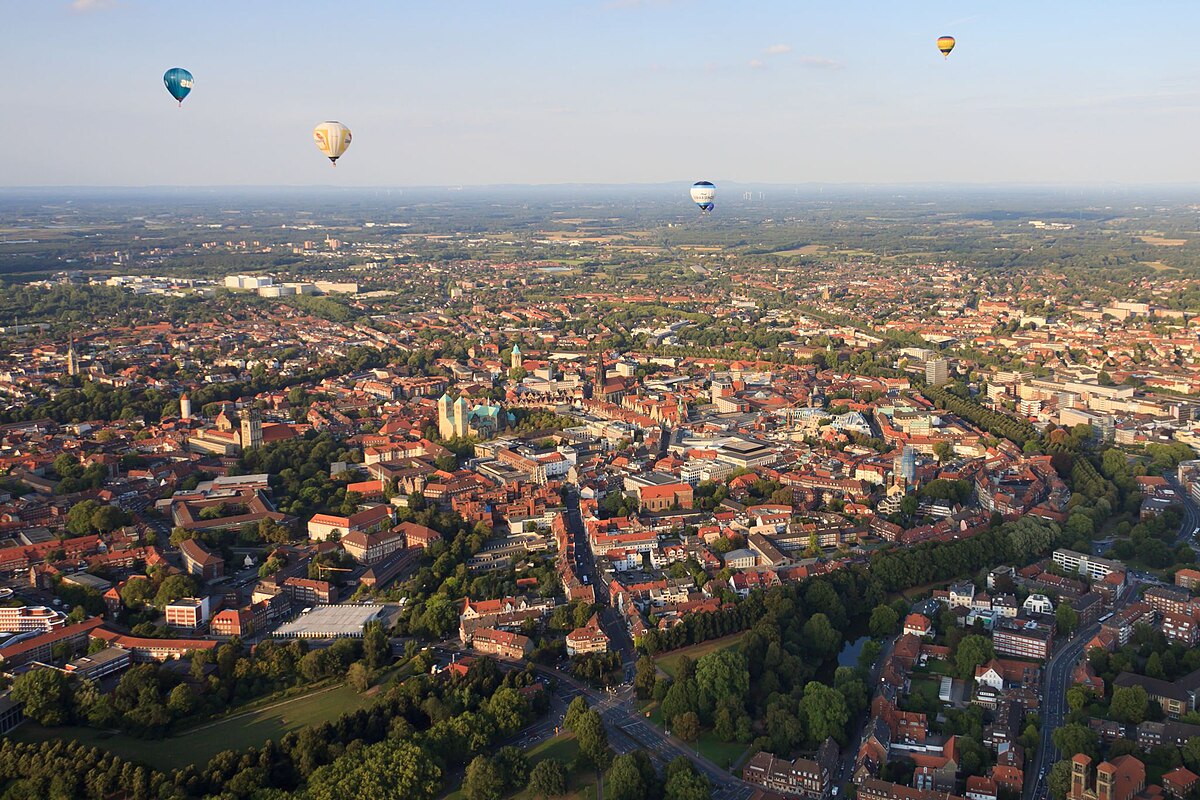
Located in the heart of North Rhine-Westphalia, Münster is a city that effortlessly combines a storied past with a lively, modern character. With a population of around 315,000 people, Münster is known for its rich history, its bustling university life, and its commitment to sustainability. It’s no wonder that this charming city, often called the “Bicycle Capital of Germany,” has become a popular destination for students, history buffs, and green living enthusiasts.
Münster dates back to 793 AD when it was founded as a missionary center by the Frisian missionary Saint Ludger. Its long and complex history has seen it evolve from a medieval center of Christianity into a thriving, modern city. In the 16th century, Münster gained international attention during the Münster Rebellion, a radical social and religious movement that ended in 1535. Today, the city retains remnants of its medieval roots, from the beautiful St. Paul’s Cathedral to the Prinzipalmarkt, a historic square lined with gabled houses that were reconstructed following World War II.
Geographically, Münster is situated near the Dortmund-Ems Canal and surrounded by lush countryside, making it a green oasis within the German urban landscape. Covering an area of approximately 303 square kilometers, the city is flat and ideal for cycling, with over 450 kilometers of dedicated bike paths. The average temperature in summer reaches around 23°C (73°F), while winter temperatures dip to a chilly 2°C (36°F) on average, often with light snow, transforming the cityscape into a quaint winter scene. Thanks to its mild, temperate climate, Münster enjoys a balance of rain and sunshine, with about 800 millimeters of precipitation annually.
The culture in Münster is a unique mix of tradition and modernity. This city has embraced its youthful spirit, largely influenced by the 45,000 students who attend the University of Münster, one of Germany’s largest universities. Founded in 1780, the university is a significant part of the city’s identity and contributes to its lively, dynamic feel. The student population brings a vibrant energy, with a constant stream of events, concerts, and art exhibits. The city is also known for its strong commitment to sustainability, demonstrated through initiatives such as the Münsterland Energy Concept, which aims to achieve climate neutrality by 2050. This commitment is visible in its efficient public transport system, which includes a comprehensive bus network and a culture that prioritizes cycling over car use; in fact, there are more bikes than people in Münster!
One of Münster’s defining cultural aspects is its impressive range of festivals and events, which draw people from across Germany and beyond. The Send, held three times a year, is a massive fair that dates back to the 11th century and features rides, food stalls, and live entertainment. The Münster Sculpture Project, held every ten years, transforms the city into an open-air museum, with installations from world-renowned artists displayed throughout the city. During the Christmas season, Münster is famous for its enchanting Christmas markets, which attract over 1 million visitors annually and fill the air with the smell of mulled wine and gingerbread.
The people of Münster are known for their friendliness and commitment to community values. The city is a mix of native Westphalians, who carry on traditional customs, and newcomers, including a notable international community of students, researchers, and professionals. Münster’s demographics reflect a balanced population with an average age of 40 years, thanks largely to the influx of young students and families. The city’s education level is notably high, with over 60% of residents holding a university degree, making it one of the most educated cities in Germany.
Economically, Münster is a regional powerhouse with a GDP per capita above the German average. The city has a well-diversified economy that includes sectors such as education, research, administration, and healthcare, all of which provide substantial employment opportunities. The University of Münster and its associated institutions are major employers, driving innovation in fields like life sciences, information technology, and nanotechnology. Additionally, Münster is known for its insurance industry, hosting the headquarters of companies such as LVM and Provinzial, two of Germany’s leading insurance firms. The city also has a thriving startup scene, with government incentives aimed at encouraging entrepreneurship, especially in green technology and digital solutions.
Infrastructure in Münster is highly developed and geared toward sustainability. The city has invested significantly in its public transport, with an extensive bus network that connects various neighborhoods to the city center. Plans are underway to further modernize the network, with an emphasis on electric buses to reduce emissions. The city’s main railway station, Münster Hauptbahnhof, serves as a regional transit hub, connecting Münster to major cities like Berlin, Hamburg, and Cologne. Münster-Osnabrück International Airport, located about 25 kilometers away, provides convenient access to national and international destinations, serving over 800,000 passengers each year.
Münster is home to numerous historic landmarks, many of which were carefully rebuilt after World War II when much of the city was damaged by bombing. The Prinzipalmarkt, with its rows of Gothic and Renaissance-style buildings, is a must-see for anyone visiting the city, as is the historic Town Hall, where the Peace of Westphalia was signed in 1648, ending the Thirty Years’ War. The St. Lambert’s Church, famous for the three iron cages that hang from its tower, tells a darker story of the city’s religious history and the fate of the Anabaptist leaders after the Münster Rebellion. In addition to these historic sites, Münster offers a variety of green spaces, like the Aasee Lake, where locals can enjoy boating, picnics, and walks along the water. The Botanical Garden, dating back to 1803, showcases more than 8,000 plant species and is a peaceful retreat right in the heart of the city.
Münster has also embraced modern architectural projects, adding a contemporary twist to its traditional landscape. The city’s harbor area, once an industrial zone, has been transformed into a trendy district filled with cafes, art galleries, and modern offices. This balance of old and new, traditional and contemporary, is one of the factors that make Münster such a fascinating place to visit or live.
The quality of life in Münster is consistently high, with the city frequently ranking as one of Germany’s most livable cities. A low crime rate, excellent public amenities, and a strong sense of community make it a welcoming place. Residents enjoy a well-rounded lifestyle that includes access to top-notch healthcare, a high standard of education, and numerous recreational opportunities. With a focus on environmental initiatives, a thriving economy, and a rich historical and cultural legacy, Münster stands out as a unique, charming, and forward-thinking city in Germany.
Leave a Reply