

| Country | Ivory Coast |
| Population | 340234 |
| Area | 2,075 km2 (801 sq mi) |
| Time Zone | UTC |
| Coordinates | 6.816111111111111, -5.274166666666667 |
| Highest elevation | None |
City Gallery




City Description
Yamoussoukro, the political and administrative capital of Ivory Coast, is a city that captures the country’s ambition, history, and natural beauty. Located around 240 kilometers northwest of Abidjan, Yamoussoukro is a city of contrasts, where sprawling boulevards meet lush green landscapes, and grand architectural feats stand alongside traditional villages. With a population of approximately 355,000, Yamoussoukro is one of the country’s most unique cities, designed to symbolize national unity and vision. Known for its vast lakes, iconic basilica, and distinctive crocodile-inhabited waterways, this city is a captivating blend of modernity and tradition.
The history of Yamoussoukro is deeply tied to the country’s first president, Félix Houphouët-Boigny, who was born in a village nearby. Originally a small village, Yamoussoukro was transformed when Houphouët-Boigny decided to make it the capital of Ivory Coast in 1983, shifting the status from Abidjan. His vision was to create a world-class city that would reflect the country’s independence and growth. Though much of this vision remains unrealized, the city developed rapidly, with large boulevards, government buildings, and landmark projects. Today, Yamoussoukro still carries Houphouët-Boigny’s legacy, especially through its iconic Basilica of Our Lady of Peace, which stands as one of the largest churches in the world and a symbol of national pride.
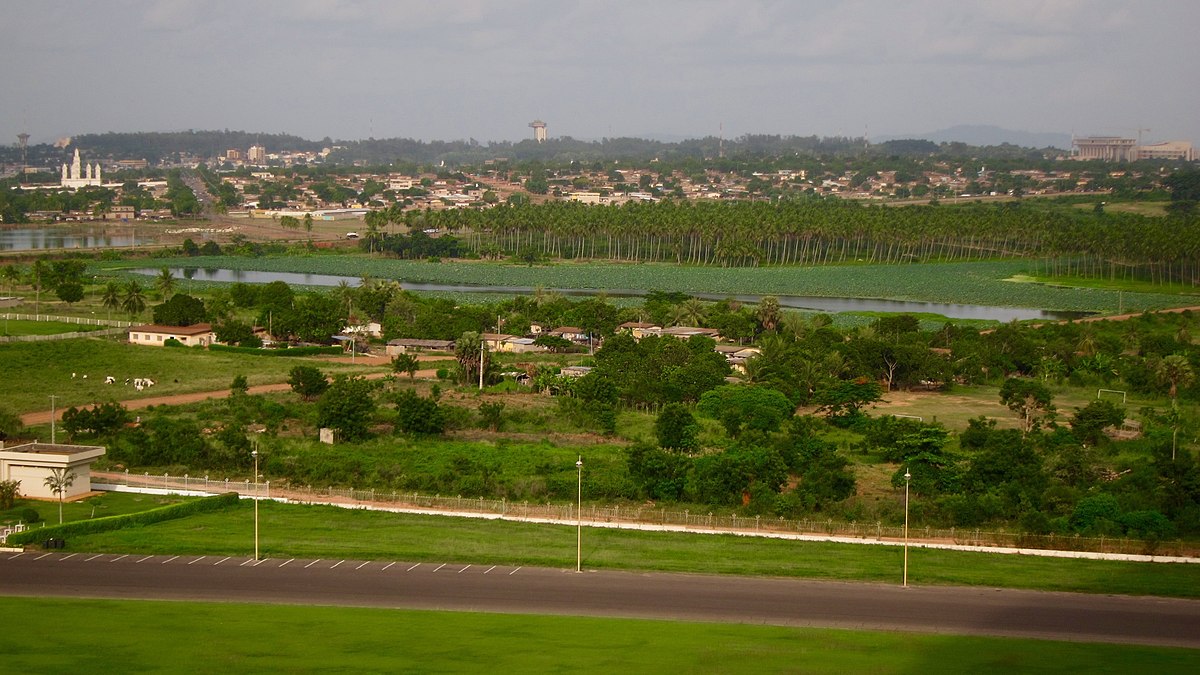
Geographically, Yamoussoukro is set on a flat plateau surrounded by savannas, lakes, and waterways, giving it a picturesque setting in the central region of Ivory Coast. The climate is tropical, with a wet season from April to October, characterized by heavy rainfall and lush greenery, and a dry season from November to March, when temperatures often reach up to 35°C. Yamoussoukro’s landscape includes beautiful, expansive man-made lakes, which were designed to enhance the city’s aesthetics and provide irrigation. These lakes are famous for their resident crocodiles, which have become a unique attraction, symbolizing strength and endurance in local lore.
Culturally, Yamoussoukro is both cosmopolitan and deeply rooted in Ivorian traditions. The city celebrates major festivals like Christmas and Easter with grandeur at the Basilica, and national holidays such as Independence Day bring people together in public squares and along boulevards for parades and festivities. Traditional dance and music, especially the Baoulé culture that dominates the region, are integral to the city’s identity. The Baoulé people have a rich tradition of storytelling, music, and dance that is showcased during local celebrations. Local crafts, like hand-woven textiles and carved wooden masks, are commonly found in Yamoussoukro’s markets, reflecting the artisan skills passed down through generations. The food scene is a blend of Ivorian staples like attiéké (fermented cassava) and grilled fish, served alongside street food favorites such as alloco (fried plantains) and spicy stews that showcase the flavors of West African cuisine.
Human resources in Yamoussoukro are shaped by the city’s educational institutions and the civil service sector. The city is home to the prestigious INP-HB (Institut National Polytechnique Félix Houphouët-Boigny), one of the leading polytechnic institutes in West Africa. INP-HB attracts students from across the region, particularly in fields like engineering, agronomy, and technology, creating a skilled workforce that supports local industries and government. Many graduates find employment within the civil service or in the city’s administrative and technical roles. The local job market also includes agriculture, hospitality, and tourism sectors, providing a variety of employment options for residents.
Economically, Yamoussoukro’s economy is supported by government administration, education, agriculture, and tourism. As the country’s political capital, it hosts several government institutions and ministries, although most commercial activities remain centered in Abidjan. The city’s agriculture sector is significant, with the surrounding region producing crops such as cocoa, coffee, yams, and rubber, which are critical to the national economy. The tourism industry, though still developing, draws visitors to see landmarks like the Basilica, the Presidential Palace, and the crocodile lakes. The Basilica of Our Lady of Peace is an architectural marvel that holds the Guinness World Record for being the world’s largest Christian church, even surpassing St. Peter’s Basilica in the Vatican. This basilica attracts both tourists and pilgrims, adding to the local economy. Yamoussoukro’s hospitality industry is growing, with hotels, restaurants, and tour services emerging to cater to visitors.
The cityscape of Yamoussoukro is striking, with wide, tree-lined boulevards, sprawling government buildings, and green spaces. The Basilica of Our Lady of Peace is the most iconic structure in the city, towering above its surroundings with impressive marble floors, stained-glass windows, and a golden dome visible for miles. The Presidential Palace, another notable landmark, is famous for its man-made lakes filled with crocodiles—a unique and somewhat unexpected feature that draws curious visitors. These crocodiles have become symbols of the city, often fed in public ceremonies that add to their mystique. The city’s neighborhoods range from modern apartments and government quarters to more traditional villages that have been preserved within Yamoussoukro’s urban landscape. The contrast between expansive boulevards and quieter, local streets captures the city’s blend of grandeur and simplicity.
Daily life in Yamoussoukro is relatively laid-back compared to the bustling commercial center of Abidjan. The city’s residents often gather around local markets, like the Grand Marché, where vendors sell everything from fresh produce to handmade crafts. These markets are central to daily life, serving as places not just to shop but also to socialize and exchange news. Residents enjoy a slower pace, with weekends often spent relaxing near the lakes, attending church, or celebrating local festivals with family and friends. Education is a priority, and many families place a strong emphasis on schooling, especially since Yamoussoukro offers quality institutions that attract students from around the country. The community’s close ties make the city feel welcoming, with a strong emphasis on family, tradition, and shared values.
Public services in Yamoussoukro include healthcare, education, and transportation, although some facilities are still developing to meet the needs of a growing population. The city has several hospitals and clinics, including the Yamoussoukro Regional Hospital, which provides medical care to residents. Education is a strong point for Yamoussoukro, thanks to institutions like INP-HB and local high schools that produce a skilled, educated population. Transportation is largely road-based, with buses, taxis, and minibuses connecting neighborhoods and nearby towns. Yamoussoukro also has an airport, although most international flights operate out of Abidjan. The city’s infrastructure is well-developed in the central areas, with wide roads and modern government buildings, though some outlying neighborhoods still rely on traditional village layouts.
Sustainability and environmental initiatives are increasingly important in Yamoussoukro, especially with the growing focus on conserving water resources and managing waste. Efforts are underway to maintain the beauty of the city’s lakes and surrounding greenery, while also ensuring that the iconic crocodile lakes remain a safe habitat. Public awareness campaigns about waste management and water conservation have been introduced in schools and local organizations, reflecting a growing commitment to sustainability.
Yamoussoukro is a city that embodies both the vision of a modern Ivory Coast and the traditions of its people. Its mix of grand architecture, cultural depth, and natural beauty makes it a city of contrasts and charm. From the awe-inspiring Basilica to the peaceful lakes and vibrant markets, Yamoussoukro offers a unique experience that reflects the country’s pride and ambition. Whether exploring its iconic landmarks, learning about local customs, or enjoying the laid-back pace of daily life, Yamoussoukro is a city with a story in every corner—one that captures the spirit and strength of the Ivorian people.
Leave a Reply