

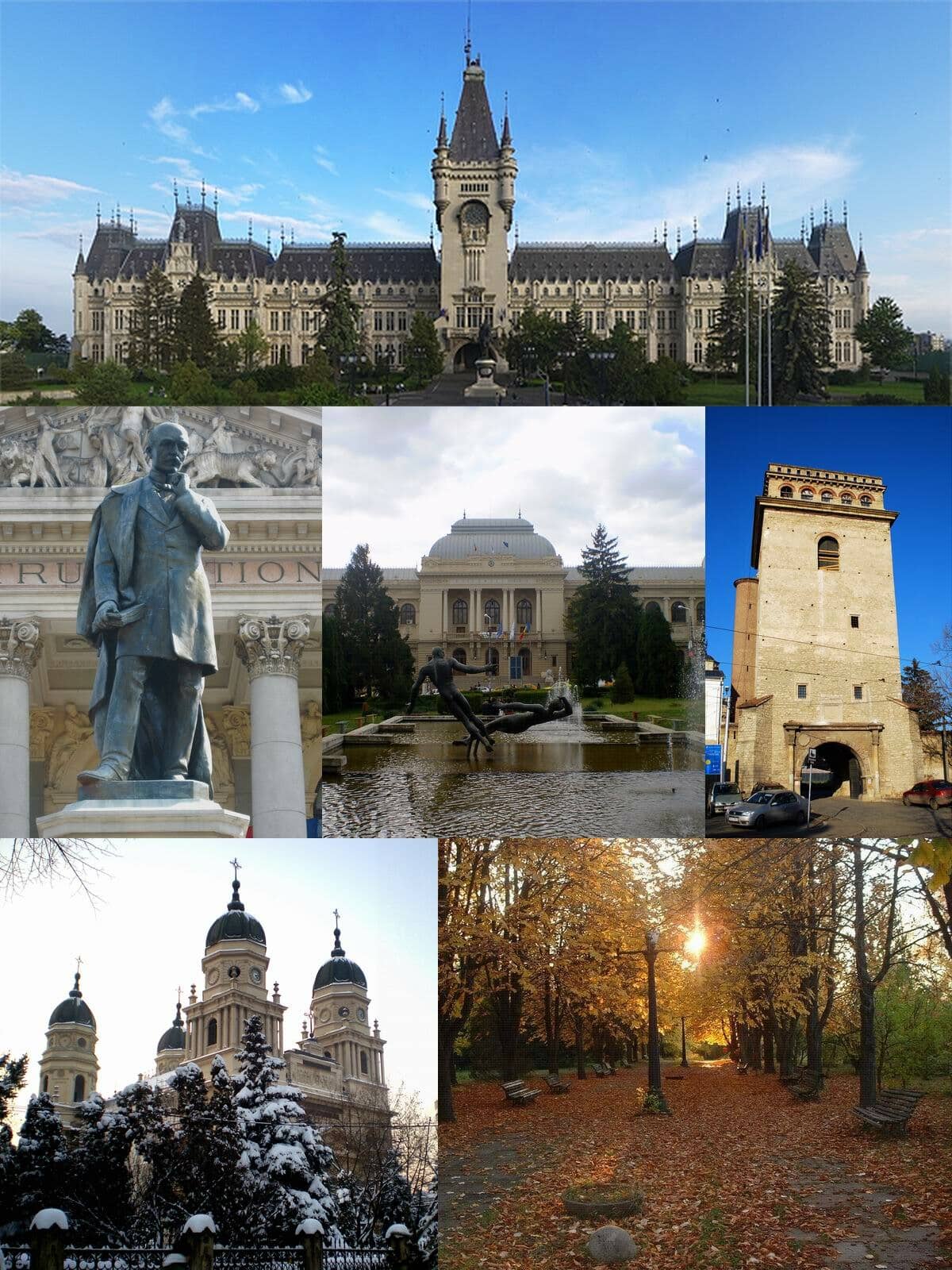
| Country | Romania |
| Population | 271692 |
| Area | 93.9 km2 (36.3 sq mi) |
| Time Zone | UTC+2 (EET) |
| Coordinates | 47.16222222222222, 27.58888888888889 |
| Highest elevation | 60 m (200 ft) |
City Gallery




City Description
Iași, often called the “Cultural Capital of Romania,” is a city rich in history, education, and tradition. Located in the northeastern part of Romania, it is one of the oldest cities in the country, with a population of around 320,000 people spread over an area of approximately 93 square kilometers. Iași is the heart of the Moldavian region and a key urban center that has played a significant role in Romania’s history, particularly as a hub of culture, politics, and academia.
Historically, Iași has deep roots dating back to at least the 14th century, and it served as the capital of Moldavia for many years before the unification of Romania. The city’s strategic position made it a crucial center for trade and diplomacy, connecting the Ottoman Empire, Poland, and Hungary. During the 19th century, Iași became an important center for the Romanian unification movement and the development of Romanian national identity. Many of the city’s landmarks, such as the impressive Palace of Culture, the Trei Ierarhi Monastery, and the oldest university in Romania, Alexandru Ioan Cuza University, reflect its historical and cultural significance.
Geographically, Iași is situated on seven hills, similar to Rome, giving it a unique topography and scenic beauty. The city lies near the Bahlui River, a tributary of the larger Prut River, which forms the natural border between Romania and Moldova. The climate in Iași is continental, with cold winters where temperatures can drop to -10°C (14°F) and hot summers reaching up to 30°C (86°F). The city’s location in the northeastern part of Romania means that it experiences all four seasons distinctly, making it a city of changing landscapes, from snow-covered streets in winter to blossoming parks in spring.
Culturally, Iași is a powerhouse, known for its theaters, literary heritage, and numerous festivals. The National Theatre of Iași, one of the oldest and most beautiful in Romania, regularly hosts performances ranging from classical plays to modern adaptations. The city also boasts a vibrant literary tradition, being the birthplace of many notable Romanian writers and poets such as Mihai Eminescu and Ion Creangă. The annual FILIT (International Festival of Literature and Translation) attracts writers and book lovers from around the world, highlighting Iași’s role as a literary hub. Museums, such as the Mihai Eminescu Museum and the Museum of Union, showcase the city’s deep connection to Romania’s cultural and political history.
Iași’s human resources are strongly influenced by its reputation as an educational center. With over 60,000 students attending its universities, Iași is often referred to as a university city. Alexandru Ioan Cuza University, the oldest in Romania, founded in 1860, is renowned for its programs in humanities, sciences, and law. The city also hosts other major institutions like the Gheorghe Asachi Technical University and the University of Medicine and Pharmacy. These universities attract students from all over Romania and beyond, creating a diverse and youthful atmosphere. The presence of a skilled and educated population supports the city’s growing sectors in technology, education, and healthcare.
Economically, Iași is developing rapidly, transitioning from a traditional administrative and educational center to a growing tech and service hub. The IT sector is booming, with many multinational companies like Amazon, Continental, and Endava setting up offices in the city. This development has provided numerous job opportunities, particularly for the city’s tech-savvy graduates, and has led to the emergence of tech parks and innovation centers. The city’s economy also benefits from its role as a service center, with banking, education, healthcare, and retail sectors providing stability and growth. The average annual income in Iași is around 42,000 RON (approximately $9,000 USD), which is steadily increasing as the city continues to attract investments and develop its industrial and technological sectors.
Transportation in Iași is well-organized, providing convenient access within the city and to other parts of Romania and beyond. Iași International Airport offers flights to major European cities such as London, Paris, and Milan, connecting the city to the broader continent. The city’s public transportation system includes buses and trams, making it easy to navigate the urban landscape. Iași is also connected to other Romanian cities via a network of railways and roads, ensuring that it remains accessible for both business and tourism.
Environmentally, Iași is committed to maintaining its green spaces and historical parks, such as the Copou Park, which is home to the oldest public garden in Romania and the famous “Linden Tree of Eminescu.” The city’s efforts to promote sustainability are evident in its push to modernize public transport, improve cycling infrastructure, and develop eco-friendly urban spaces. Recent projects aimed at revitalizing the Bahlui River area and increasing green space availability reflect the city’s efforts to balance growth with environmental conservation.
Iași is a city where history and modernity come together. It offers a blend of old-world charm, with its cobblestone streets and historical landmarks, and the energy of a modern, youthful city fueled by its student population and growing tech industry. Whether exploring the majestic Palace of Culture, strolling through the blooming Copou Park, or enjoying a coffee in one of its many book-themed cafes, Iași captures the essence of Romania’s past while embracing its future. As a city that values education, culture, and development, Iași continues to be a beacon of growth and tradition in northeastern Romania.
Leave a Reply