

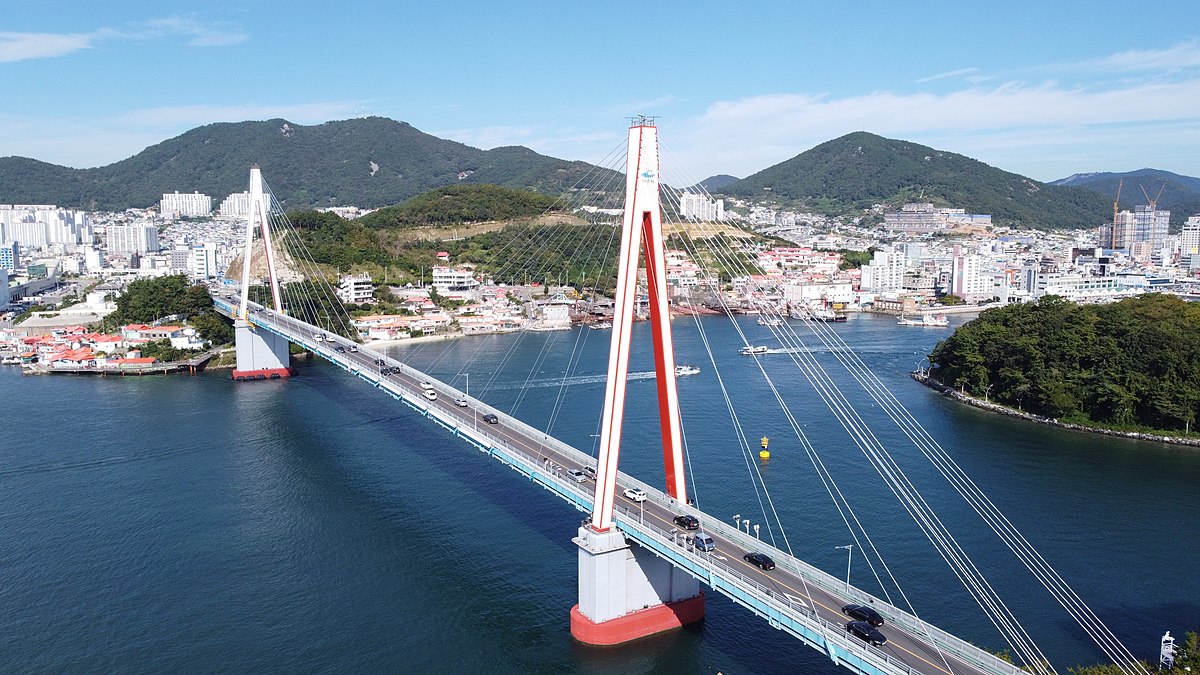
| Country | South Korea |
| Population | 268823 |
| Area | 503.33 km2 (194.34 sq mi) |
| Time Zone | UTC+9 (Korea Standard Time) |
| Coordinates | 34.733333333333334, 127.73333333333333 |
| Highest elevation | None |
City Gallery




City Description
Yeosu, a beautiful coastal city in South Korea’s South Jeolla Province, is a place where history, nature, and modernity come together seamlessly. With a population of around 280,000 people spread over 503 square kilometers, Yeosu is known for its stunning seascapes, vibrant maritime culture, and its role as a major port city. It’s one of South Korea’s top coastal destinations, attracting both domestic and international visitors looking to explore its natural beauty and rich cultural heritage.
Historically, Yeosu’s location along the southern coast of the Korean Peninsula made it a strategic and important city throughout Korean history. It served as a naval base during the Joseon Dynasty and was instrumental in the defense against Japanese invasions in the late 16th century, particularly under the leadership of Admiral Yi Sun-sin. The city’s legacy is still celebrated today, with monuments and museums dedicated to Admiral Yi, including a replica of his famed “turtle ship” (Geobukseon) displayed at Dolsan Park. Yeosu’s historical significance extends to its role as a hub of trade and fishing, which has shaped its development over centuries.
Geographically, Yeosu is a city defined by its coastline. It stretches along the southern tip of the Korean Peninsula, surrounded by over 300 small islands and islets, many of which are uninhabited. This gives Yeosu a unique landscape of peninsulas, coves, and beaches, making it a paradise for nature lovers and beachgoers. The city enjoys a humid subtropical climate, with mild winters and warm, humid summers. Temperatures range from an average of 5°C (41°F) in winter to around 26°C (79°F) in summer, making it a year-round destination. The city’s coastal location also means it experiences seasonal monsoon rains, particularly in July and August.
Culturally, Yeosu is a city that thrives on its connection to the sea. The annual Yeosu International Fireworks Festival is a highlight, drawing crowds to watch spectacular displays over the ocean. The Yeosu Expo, held in 2012, significantly boosted the city’s profile, bringing international attention to its marine and environmental conservation efforts. The legacy of the expo remains, with attractions like the Yeosu Expo Memorial Park and the Aquarium continuing to be popular destinations. The city is also known for its fresh seafood markets, particularly in the Odongdo and Dolsan areas, where visitors can enjoy local delicacies like grilled eel (jangeo-gui), sashimi, and spicy seafood stews (jjigae).
Yeosu’s human resources are shaped by its role as a coastal hub. The city has a high literacy rate, above 98%, supported by a well-developed educational system that includes institutions like the Yeosu National University, focusing on engineering, maritime studies, and environmental science. The presence of these institutions attracts students from across the region and supports the city’s industries. The city’s workforce is diverse, with many employed in sectors like fishing, tourism, shipbuilding, and increasingly, in green technology initiatives driven by the city’s focus on sustainable development and its maritime heritage.
Economically, Yeosu’s economy has long been driven by its port and fishing industries. The Port of Yeosu is one of South Korea’s largest, handling a significant volume of goods, particularly petrochemicals and industrial products. The Yeosu Industrial Complex, a major petrochemical hub, plays a crucial role in the city’s economy, employing thousands and supporting related industries. Tourism is another major economic driver, boosted by the city’s coastal beauty, islands, and events like the Yeosu Expo. The average household income in Yeosu is around 40 million KRW annually (approximately $33,000 USD), reflecting the balance between its industrial, fishing, and tourism sectors.
Transportation in Yeosu is well-developed, with options that make it accessible for both residents and tourists. The city is connected to Seoul and other major cities by the KTX high-speed train, making travel between Yeosu and the capital convenient in just under 3 hours. Yeosu Airport provides domestic flights, mainly to Gimpo Airport in Seoul, and is about a 30-minute drive from the city center. The city’s public transportation includes buses and ferries that connect the mainland to the surrounding islands, ensuring easy mobility across its coastal and island areas. Local ferries also offer scenic routes, giving visitors a chance to explore the many islands dotting Yeosu’s coastline.
Environmentally, Yeosu is committed to maintaining its coastal and marine ecosystems. The city’s mangroves, wetlands, and diverse marine life are protected through local and national conservation efforts. The Dadohaehaesang National Park, which includes parts of Yeosu, is a prime example of these efforts, offering trails, beaches, and observation points for visitors to enjoy the natural beauty while supporting sustainable tourism. The city’s emphasis on green development is also reflected in its renewable energy projects, including wind farms and initiatives to reduce pollution from its industrial complexes.
Yeosu is a city where the sea meets culture and industry, creating a dynamic and appealing environment for both residents and visitors. Whether exploring the historical sites dedicated to Admiral Yi, savoring fresh seafood at one of its many markets, or taking a boat tour around its picturesque islands, Yeosu provides a vibrant and multifaceted experience. Its blend of history, coastal beauty, and modern amenities make it one of South Korea’s hidden gems, offering an authentic taste of life on the country’s southern shores.
Leave a Reply