

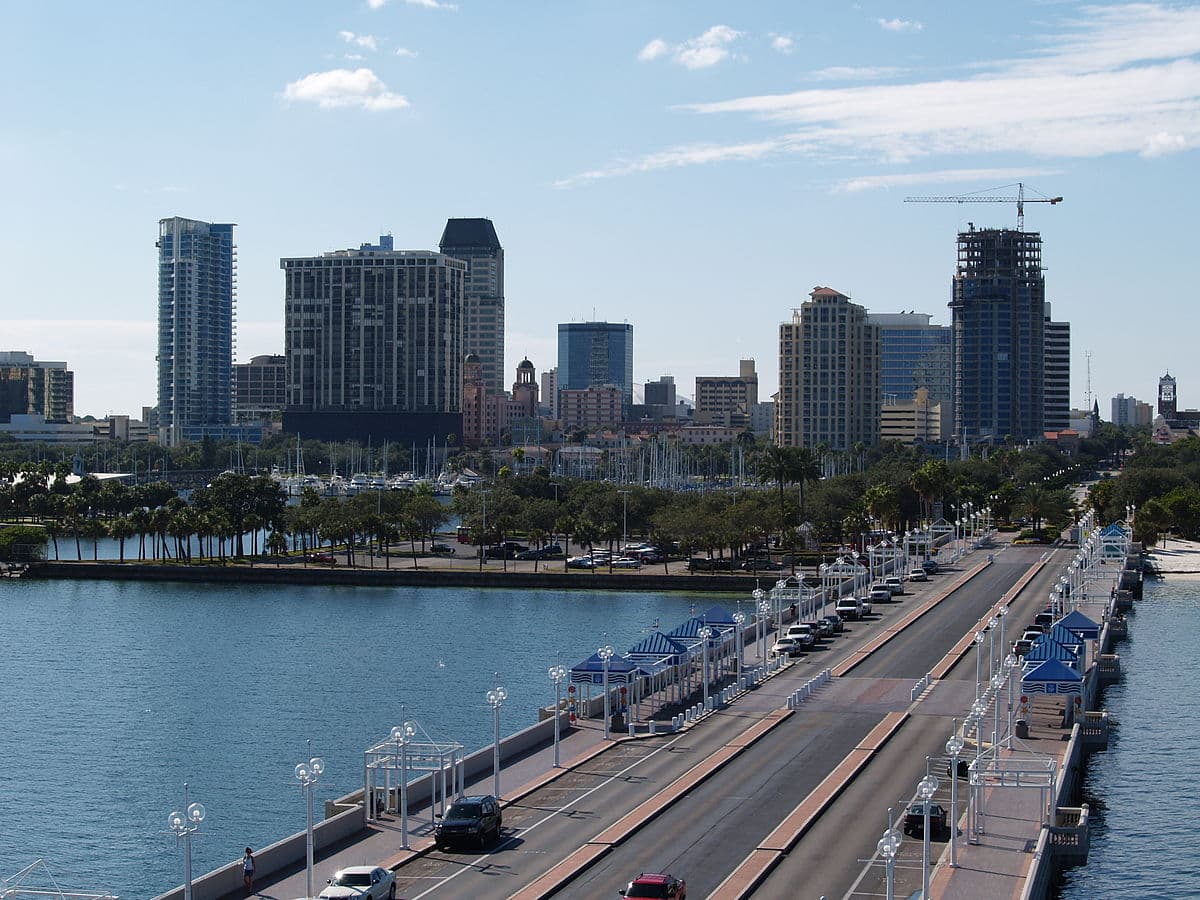
| Country | United States |
| Population | 258308 |
| Area | 135.49 sq mi (350.93 km2) |
| Time Zone | UTC−05:00 (Eastern (EST)) |
| Coordinates | 27.773055555555555, -82.64 |
| Highest elevation | 44 ft (13.4 m) |
City Gallery




City Description
St. Petersburg, Florida, often referred to as “The Sunshine City,” is a vibrant coastal community located on the western side of the state. It’s part of the Tampa Bay area and has a population of around 265,000 as of 2023, making it the fifth-largest city in Florida. Known for its warm weather, stunning waterfront views, and thriving arts scene, St. Petersburg is a popular destination for both tourists and those seeking a lively yet relaxed lifestyle. With its diverse neighborhoods, rich history, and a mix of urban and beach vibes, this city offers a little bit of everything.
The history of St. Petersburg dates back to the late 19th century when it was founded in 1888 by John C. Williams and Peter Demens. Demens, a Russian aristocrat, named the city after his hometown of Saint Petersburg, Russia. Originally developed as a small fishing village, the arrival of the railroad turned it into a major port and hub for trade and tourism. The city quickly grew as a popular destination for “snowbirds” escaping the colder northern climates. By the 1920s, St. Petersburg was thriving as a tourist hotspot, and its iconic Mediterranean Revival and Art Deco architecture began to take shape, much of which can still be seen today. Over the decades, St. Pete has continued to grow, blending its beach-town charm with urban development and artistic culture.
Geographically, St. Petersburg is situated on the Pinellas Peninsula between Tampa Bay and the Gulf of Mexico. Its coastal location gives the city stunning waterfront views and easy access to beaches like St. Pete Beach and Treasure Island, which are just a short drive away. The city enjoys a humid subtropical climate, with warm to hot temperatures most of the year. Summers can get hot and humid, with temperatures often hitting the low 90s Fahrenheit and frequent afternoon thunderstorms. Winters are mild, with temperatures averaging in the 60s and 70s, making it a year-round outdoor destination. The city boasts about 361 days of sunshine annually, living up to its nickname, and holds the Guinness World Record for the most consecutive sunny days at 768 days.
St. Petersburg’s culture is an eclectic mix of beach life, arts, and urban sophistication. The city is home to the Salvador Dalí Museum, one of the largest collections of Dalí’s works outside of Spain. The museum is an anchor for the city’s thriving art scene, which also includes the Museum of Fine Arts, the Chihuly Collection, and numerous independent galleries throughout the downtown area. Every October, the city hosts the SHINE Mural Festival, where artists from around the world transform the city’s walls into vibrant, large-scale murals, making St. Pete one of the top destinations for street art enthusiasts.
In addition to its art scene, the city is known for its lively music and nightlife. Central Avenue, running through the heart of downtown, is lined with bars, live music venues, and restaurants, offering everything from local craft beers to international cuisines. The city’s waterfront parks also host outdoor concerts, festivals, and markets, creating a community vibe that brings locals and visitors together. The Saturday Morning Market, held weekly, is a beloved tradition where vendors sell fresh produce, handmade crafts, and local food, making it a bustling spot for mingling and enjoying the city’s laid-back atmosphere.
The economy of St. Petersburg is diverse, driven by tourism, healthcare, education, and finance. Tourism remains a major pillar, thanks to the city’s beautiful beaches, museums, and outdoor activities. St. Pete attracts millions of visitors each year, and the hospitality industry thrives with a variety of hotels, resorts, restaurants, and entertainment venues that cater to tourists. The city’s proximity to both the Gulf of Mexico and Tampa Bay also makes it a hub for boating, fishing, and water sports, with a thriving marina scene that supports local businesses.
In addition to tourism, healthcare is a major economic driver. The city is home to several top-tier hospitals and medical centers, including Johns Hopkins All Children’s Hospital and Bayfront Health St. Petersburg, which provide advanced medical care and employ thousands of healthcare professionals. The presence of these facilities, along with specialized clinics and wellness centers, has positioned St. Pete as a leader in the health sector in Florida, attracting healthcare workers and specialists from around the country.
Finance and professional services also play a key role in St. Petersburg’s economy. The city hosts the headquarters of major companies like Raymond James Financial and Jabil Circuit, contributing to the city’s growing business sector. These firms provide employment for thousands of residents and support the city’s reputation as a business-friendly environment, attracting young professionals and entrepreneurs. The city’s partnership with nearby universities, like the University of South Florida St. Petersburg, helps develop a well-educated workforce that supports these industries.
The city’s human resources are shaped by its diverse economy and vibrant education sector. St. Petersburg’s population includes a mix of retirees, young professionals, artists, and families. The University of South Florida St. Petersburg and St. Petersburg College offer a range of programs that contribute to the local economy by training students in business, technology, and the arts. These institutions also collaborate with local companies, creating internships and job opportunities that retain talent in the area. The presence of these schools, alongside smaller vocational and technical colleges, ensures that St. Pete has a skilled workforce that supports its growth in healthcare, technology, and the arts.
Real estate in St. Petersburg is varied, offering everything from historic bungalows in neighborhoods like Old Northeast to luxury condos and waterfront properties in areas like Snell Isle and Downtown. The average home price in the city is around $400,000, which is competitive given its coastal location and proximity to major amenities. The development of new apartments and condos in the downtown area reflects the city’s urban growth, with a focus on attracting young professionals and retirees looking for a lively yet manageable city lifestyle. Real estate demand remains strong, particularly for waterfront properties and homes close to downtown, where walkability and easy access to the city’s cultural and social offerings are key selling points.
Transportation in St. Petersburg is supported by a well-developed road network and public transportation system. The city is connected to the rest of the Tampa Bay area by several bridges, including the Sunshine Skyway Bridge, which offers a scenic route over the bay to Bradenton and points south. Pinellas Suncoast Transit Authority (PSTA) operates buses throughout the city and surrounding areas, and there are plans to expand public transit options as the city grows. Additionally, the Cross-Bay Ferry connects St. Pete to downtown Tampa, offering a convenient and scenic commute across the bay. For those traveling farther, the nearby St. Pete-Clearwater International Airport and Tampa International Airport provide domestic and international flights.
Green spaces are plentiful in St. Petersburg, contributing to the city’s outdoor-friendly atmosphere. The waterfront parks, including Vinoy Park and Demens Landing, offer beautiful spots for picnicking, jogging, and festivals, with views of the marina and the bay. The city’s commitment to green spaces is evident in the development of the new St. Pete Pier, a waterfront destination featuring restaurants, art installations, and recreational areas that attract locals and tourists alike. The nearby Boyd Hill Nature Preserve provides an escape into Florida’s natural habitat, offering trails and wildlife viewing opportunities just minutes from downtown.
Tourism remains the backbone of St. Petersburg’s economy, with millions of visitors annually drawn to its beaches, cultural sites, and outdoor events. The city’s local government and tourism board actively promote St. Pete as a year-round destination, emphasizing its arts scene, dining options, and sunny weather. The annual St. Pete Grand Prix, a major motor racing event held on the streets of downtown, attracts tens of thousands of visitors and has become a key event in the city’s calendar, boosting the local economy and showcasing St. Pete on an international stage.
Despite its strengths, St. Petersburg faces challenges typical of growing coastal cities, such as managing development while preserving its historic charm and addressing the risks associated with climate change and rising sea levels. The city is investing in infrastructure to improve drainage systems and protect its coastline, and there are ongoing efforts to enhance public transportation to accommodate the growing population and reduce traffic congestion, particularly in the downtown area. Balancing growth with sustainability is a priority as St. Pete aims to maintain its reputation as a livable and attractive city.
St. Petersburg is a city that shines with its balance of beach life and urban energy. Its growth from a small fishing village to a vibrant hub for arts, culture, and business showcases its adaptability and appeal. Whether you’re exploring its street art murals, enjoying a day at one of its pristine beaches, or dining along the waterfront, St. Pete offers a dynamic and diverse experience that captures the best of Florida living.
Leave a Reply