

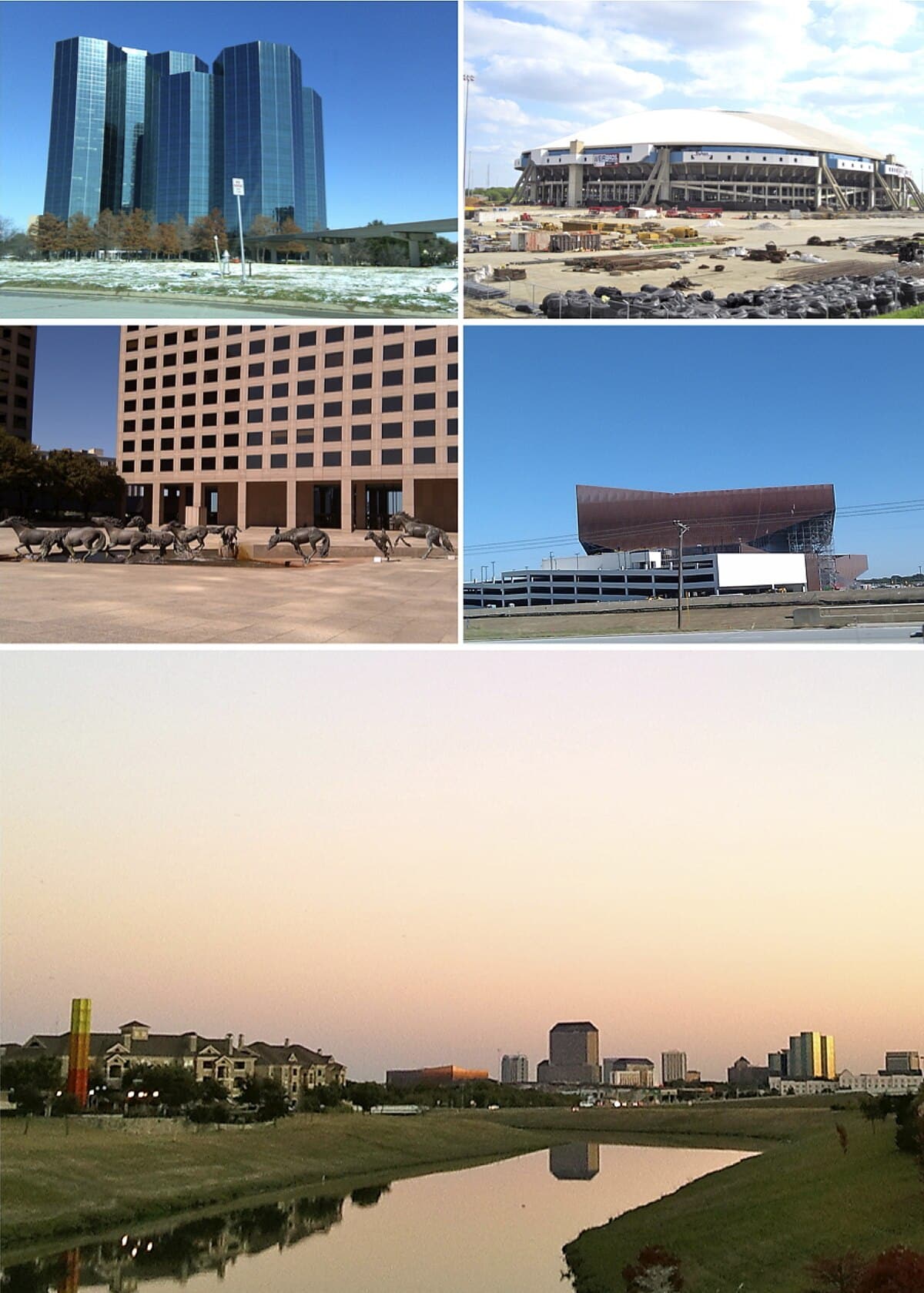
| Country | United States |
| Population | 256732 |
| Area | 67.97 sq mi (176.04 km2) |
| Time Zone | UTC−06:00 (CST) |
| Coordinates | 32.81666666666667, -96.95 |
| Highest elevation | 482 ft (147 m) |
City Gallery




City Description
Irving, Texas, located in the heart of the Dallas-Fort Worth Metroplex, is a vibrant and diverse city that offers a perfect blend of business opportunities, suburban comfort, and cultural richness. With a population of around 256,000 as of 2023, Irving has grown into one of the most dynamic cities in North Texas, known for its strong economy, expansive green spaces, and proximity to major urban centers. Whether you’re looking for a bustling corporate environment, a family-friendly suburb, or a multicultural community, Irving has something for everyone.
The history of Irving dates back to the early 20th century when it was founded in 1903 by J.O. Schulze and Otis Brown. Initially, the area was primarily agricultural, with farmers cultivating crops like cotton. However, its strategic location between Dallas and Fort Worth, combined with the arrival of the Texas Interurban Railway, turned Irving into a vital connection point. The city was officially incorporated in 1914, and it steadily grew through the mid-20th century as more businesses and residents moved in, attracted by its accessibility and open spaces. The construction of the Dallas/Fort Worth International Airport (DFW) in the 1970s was a game-changer, placing Irving at the heart of one of the busiest transportation hubs in the United States and transforming it into a major center for commerce and industry.
Geographically, Irving is situated in North Texas, approximately 12 miles northwest of downtown Dallas and 20 miles east of Fort Worth. This central location within the Metroplex makes it a prime spot for businesses and residents who want quick access to both cities. The city covers about 67 square miles, and its landscape is a mix of suburban neighborhoods, corporate office parks, and natural areas. Irving’s climate is typical of Texas, with hot summers where temperatures often exceed 100 degrees Fahrenheit and mild winters averaging between 40 and 60 degrees. The area experiences plenty of sunshine year-round, making it an attractive place for outdoor activities.
Irving’s culture is a reflection of its diverse and multicultural community. The city has a rich mix of residents from various backgrounds, including a large South Asian, Hispanic, and African American population. This diversity is evident in the city’s festivals, food scene, and community events. One of the most popular events is the annual Canal Fest, held at the Mandalay Canal in Las Colinas, which celebrates global cultures through music, dance, food, and art. Irving also hosts the Dragon Boat Festival, reflecting its multicultural spirit and embracing its Asian community through traditional boat races and cultural performances. This blend of cultures makes Irving a dynamic and inclusive place to live.
The economy of Irving is robust, driven by its strategic location and the presence of numerous large corporations. The city is home to the Las Colinas Urban Center, one of the first master-planned business communities in the United States. Las Colinas has become a major hub for Fortune 500 companies, including ExxonMobil, Kimberly-Clark, and Fluor Corporation, making it a key economic engine for the city. This business district features over 30 million square feet of office space, lakes, golf courses, and luxury residential developments, attracting professionals and families alike. The economic activity generated by Las Colinas not only provides thousands of jobs but also supports a wide range of businesses, from hotels and restaurants to retail and entertainment.
In addition to its corporate presence, Irving benefits from its proximity to Dallas/Fort Worth International Airport (DFW), one of the busiest airports in the world. The airport supports over 60,000 jobs and contributes significantly to the local economy by attracting businesses that rely on global connectivity. Companies involved in logistics, transportation, and international trade are particularly drawn to Irving, enhancing its reputation as a global business hub.
The city’s economy is also bolstered by the healthcare and education sectors. Several hospitals and medical centers operate in Irving, including Baylor Scott & White Medical Center and Medical City Las Colinas, providing healthcare services and employment opportunities to thousands. The city’s educational institutions, such as the University of Dallas and North Lake College, play a significant role in the local economy, attracting students from across Texas and beyond. The University of Dallas, known for its strong business programs, has deep ties with local businesses, offering internships and collaborative projects that benefit both students and the corporate community.
Irving’s human resources are diverse and well-educated, reflecting the city’s focus on technology, business, and professional services. Many residents work in the finance, technology, and healthcare sectors, benefiting from the opportunities created by the presence of multinational companies and the city’s proximity to major urban centers. Irving’s workforce is one of the most diverse in the Metroplex, with professionals from around the world, making the city a multicultural hub that supports global business operations.
The real estate market in Irving is varied, offering options for families, young professionals, and retirees alike. The city’s housing ranges from affordable apartments and townhouses to upscale homes in neighborhoods like Las Colinas. The average home price in Irving is around $350,000, which is relatively affordable compared to other parts of the Metroplex like Plano or Frisco. The ongoing development in areas like Las Colinas and Valley Ranch, with their luxury apartments and new home communities, reflects the city’s growth and appeal. Irving’s central location, combined with its strong economic base, continues to attract new residents and investors, leading to a steady demand for housing.
Transportation in Irving is well-developed, thanks to its central location and public transit options. The city is connected by major highways, including Interstate 635 and Highway 114, which provide easy access to Dallas, Fort Worth, and the airport. The Dallas Area Rapid Transit (DART) system operates light rail services that connect Irving to downtown Dallas and other parts of the Metroplex, making commuting convenient for residents who work in neighboring cities. The city’s proximity to DFW Airport also means residents and businesses have access to national and international flights, supporting both leisure and business travel.
Green spaces and recreational areas are abundant in Irving, enhancing the quality of life for residents. The city boasts over 2,000 acres of parks and open spaces, with popular spots like the Campión Trail, a 22-mile greenbelt that offers walking, running, and biking trails along the Trinity River. Irving’s many lakes and canals, especially those in the Las Colinas area, provide scenic views and opportunities for boating and fishing, creating a unique, water-centered environment that contrasts with the urban skyline. Golf enthusiasts can also enjoy courses like the Las Colinas Country Club and the Hackberry Creek Country Club, which offer well-maintained greens and club amenities.
Tourism is an important aspect of Irving’s economy, thanks to its combination of business and leisure attractions. The Irving Convention Center at Las Colinas hosts numerous conferences, trade shows, and events, drawing visitors from across the country. The Toyota Music Factory, a multi-venue entertainment complex, attracts crowds for concerts, festivals, and live performances, contributing to the city’s vibrant nightlife. Additionally, Irving’s historic district, with sites like the Ruth Paine House Museum—connected to the assassination of President John F. Kennedy—adds a touch of history that appeals to visitors interested in exploring the city’s past.
Despite its strengths, Irving faces challenges typical of fast-growing urban centers, such as traffic congestion and maintaining infrastructure. The city’s roads and highways can become congested, particularly during rush hours and around major business areas like Las Colinas. To address this, Irving has invested in expanding road networks and improving public transit options to keep up with its growth. The city also focuses on sustainability efforts, such as expanding green spaces and promoting eco-friendly initiatives, to maintain a balance between urban development and quality of life.
Whether you’re exploring the scenic trails along its waterways, enjoying a concert at the Toyota Music Factory, or engaging with the city’s multicultural food scene, Irving offers a vibrant and evolving urban experience that showcases the best of North Texas. It’s a city that might surprise you if you were to guess the country names game, given its rich blend of cultures and international influences that make you feel like you’re exploring multiple destinations all at once.
Leave a Reply