


| Country | Libyan Arab Jamahiriya |
| Population | 1207250 |
| Area | 314 km2 (121 sq mi) |
| Time Zone | UTC+2 (EET) |
| Coordinates | 32.11486, 20.06859 |
| Highest elevation | 2 m (7 ft) |
City Gallery




City Description
Benghazi, the second-most-populous city in Libya and the largest city in Cyrenaica, is a city rich in history and cultural significance. With an estimated population of 1,207,250 in 2020, Benghazi is a major urban center and a vital seaport located on the Gulf of Sidra in the Mediterranean.
The history of Benghazi dates back to around 525 BC when it was initially established as a Greek colony named Euesperides. In the 3rd century BC, the city was relocated and refounded as the Ptolemaic city of Berenice. Under Roman rule, Berenice flourished, eventually surpassing Cyrene and Barca as the center of Cyrenaica by the 3rd century AD. However, the city’s prominence waned during the Byzantine period, and it was reduced to a small town before being conquered by the Arabs.
Benghazi experienced a significant period of peaceful Ottoman rule, which lasted for around four centuries. This stability was disrupted in 1911 when Italy captured Benghazi and the rest of Tripolitania from the Ottoman Empire. During Italian rule, particularly in the late 1930s, Benghazi underwent extensive development and modernization, transforming into a modern urban center.
World War II brought significant turmoil to Benghazi, as the city changed hands multiple times and suffered extensive damage. Post-war reconstruction efforts restored Benghazi, and it became the co-capital of the newly independent Kingdom of Libya. This status was short-lived, however, as the 1969 coup d’état led by Muammar Gaddafi resulted in the relocation of all government offices to Tripoli, stripping Benghazi of its capital status.
In recent history, Benghazi played a crucial role in the 2011 uprising against Muammar Gaddafi’s government. The city was the birthplace of the revolt, which quickly spread to other parts of Libya. By 21 February 2011, Benghazi was under the control of Gaddafi’s opponents, who established the National Transitional Council (NTC). The city was a pivotal site during the Libyan Civil War, particularly on 19 March 2011, when local resistance and intervention by the French Air Force repelled an attack by the Libyan Army, marking a turning point in the conflict.
The aftermath of the civil war saw Benghazi caught in the midst of a second civil war starting in 2014, with Libya divided between the House of Representatives in Tobruk and the Government of National Accord in Tripoli. A permanent ceasefire in 2020 led to the establishment of a unitary government, providing a semblance of stability.
Geographically, Benghazi’s coastal location on the Mediterranean provides it with a strategic advantage, making it an important hub for commerce and transportation. The city’s seaport is vital for trade, especially for the export of Libyan oil and other goods.
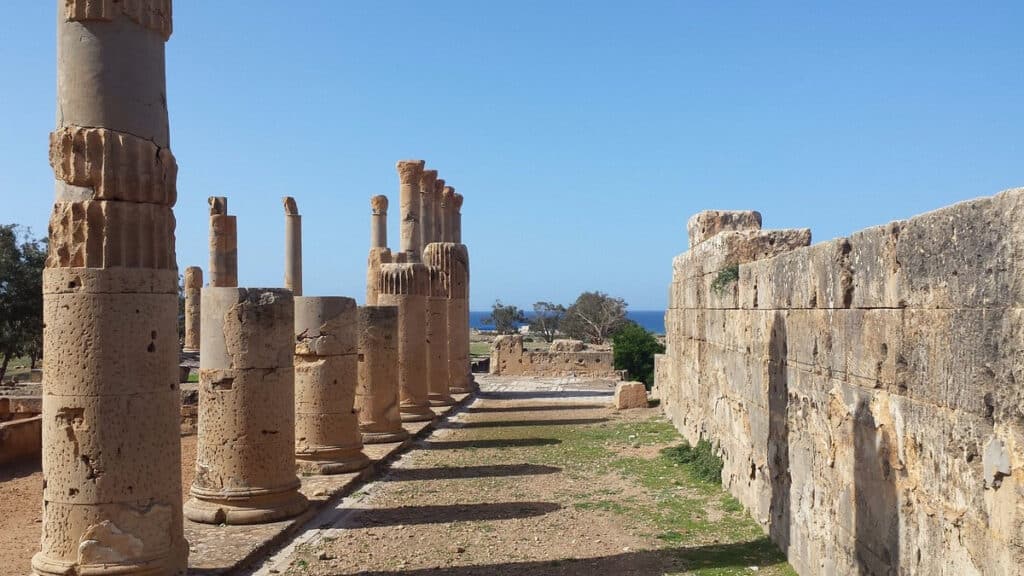
Culturally, Benghazi is a vibrant city with a rich heritage. It is home to numerous institutions and organizations typically associated with a capital city, including several national government buildings and the National Library of Libya. The city’s diverse history is reflected in its architecture and cultural sites, which range from ancient Greek ruins to modern Italian-era buildings.
Economically, Benghazi remains a center of Libyan commerce, industry, and transport. The city’s economy is driven by its role as a major seaport and its proximity to Libya’s oil fields. Despite the challenges posed by recent conflicts, Benghazi continues to be a crucial economic hub in Libya.
Human resources in Benghazi are characterized by a resilient and resourceful population. The city’s educational institutions, including the University of Benghazi, play a significant role in developing a skilled workforce that contributes to various sectors of the economy. The city’s young population is dynamic and eager to rebuild and contribute to the nation’s development.
In conclusion, Benghazi is a city that embodies the spirit of resilience and renewal. Its rich history, cultural significance, and strategic location make it a vital part of Libya’s past, present, and future. Despite the challenges it has faced, Benghazi continues to be a beacon of Libyan commerce, culture, and community.
Leave a Reply