


| Country | United States |
| Population | 227470 |
| Area | 88.52 sq mi (229.27 km2) |
| Time Zone | UTC−6 (CST) |
| Coordinates | 30.4475, -91.17861111111111 |
| Highest elevation | 46 ft (14 m) |
City Gallery




City Description
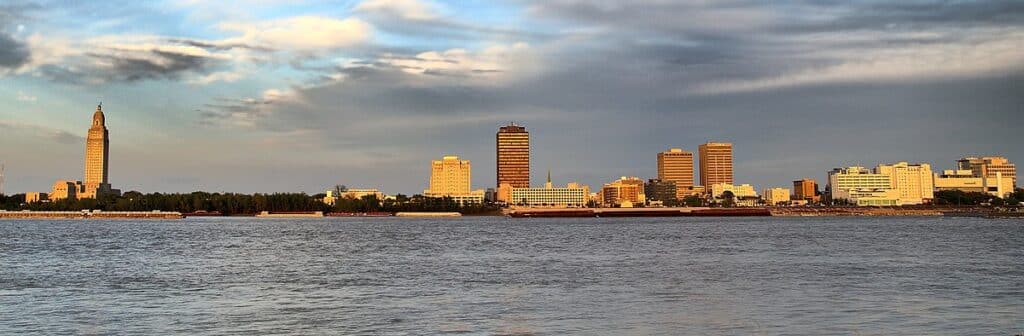
Baton Rouge, the capital city of Louisiana, is a lively and historically rich hub that blends Southern charm with a thriving economy and vibrant cultural scene. Located along the eastern bank of the Mississippi River, Baton Rouge is home to around 227,000 people in the city proper, with the greater metropolitan area encompassing nearly 870,000 residents, making it the second-largest city in Louisiana after New Orleans. Known for its deep connection to Louisiana’s unique culture, Baton Rouge is a city that mixes its history with modern industry, higher education, and a love for food, music, and festivals.
Baton Rouge’s history is as colorful as its name, which translates to “Red Stick” in French, a reference to a red pole that marked the boundary between Native American tribes in the area when French explorers first arrived in 1699. The city was officially founded in 1719 and became the state capital in 1846. Baton Rouge’s strategic location on the Mississippi River has played a significant role in its development, particularly during the Civil War, when it was a key port city. Over time, the city grew into an economic powerhouse, thanks to its access to waterways and later, its role as a center for the petrochemical industry.
Geographically, Baton Rouge enjoys a prime location in southeastern Louisiana, with the mighty Mississippi River serving as a major influence on its development. The city covers an area of about 233 square kilometers and lies just 80 kilometers northwest of New Orleans. Baton Rouge’s climate is typically humid subtropical, with long, hot summers and mild winters. Average summer highs often reach 33°C (91°F), while winter temperatures average around 11°C (52°F). The city receives significant rainfall, around 1,600 mm (63 inches) per year, with frequent thunderstorms, especially during the summer. Baton Rouge is also vulnerable to hurricanes due to its location near the Gulf of Mexico, although it is farther inland than many coastal cities.
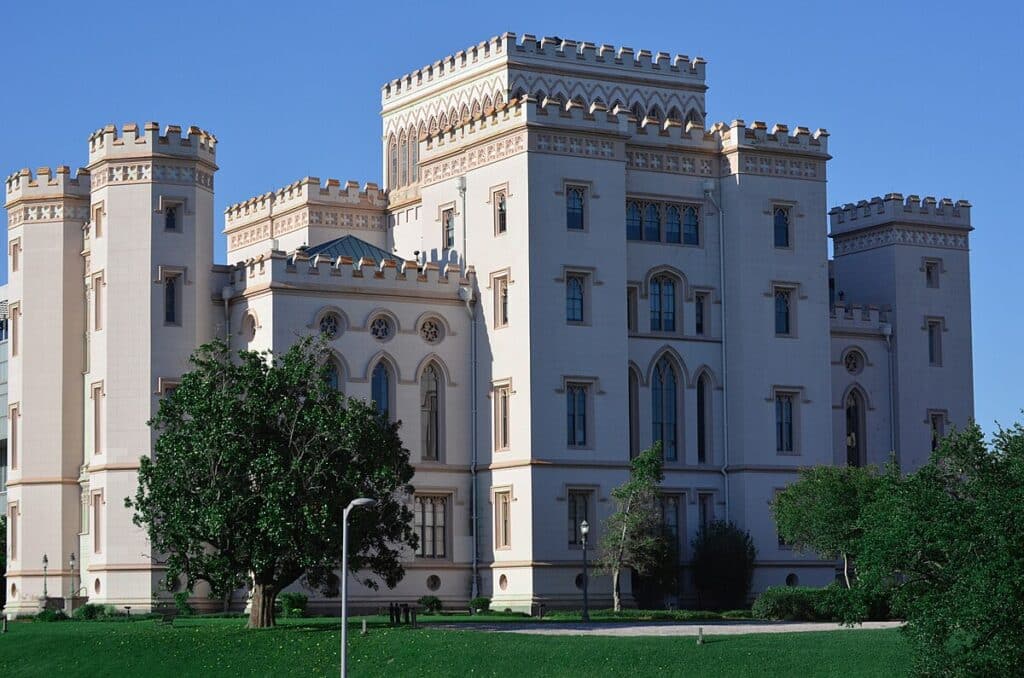
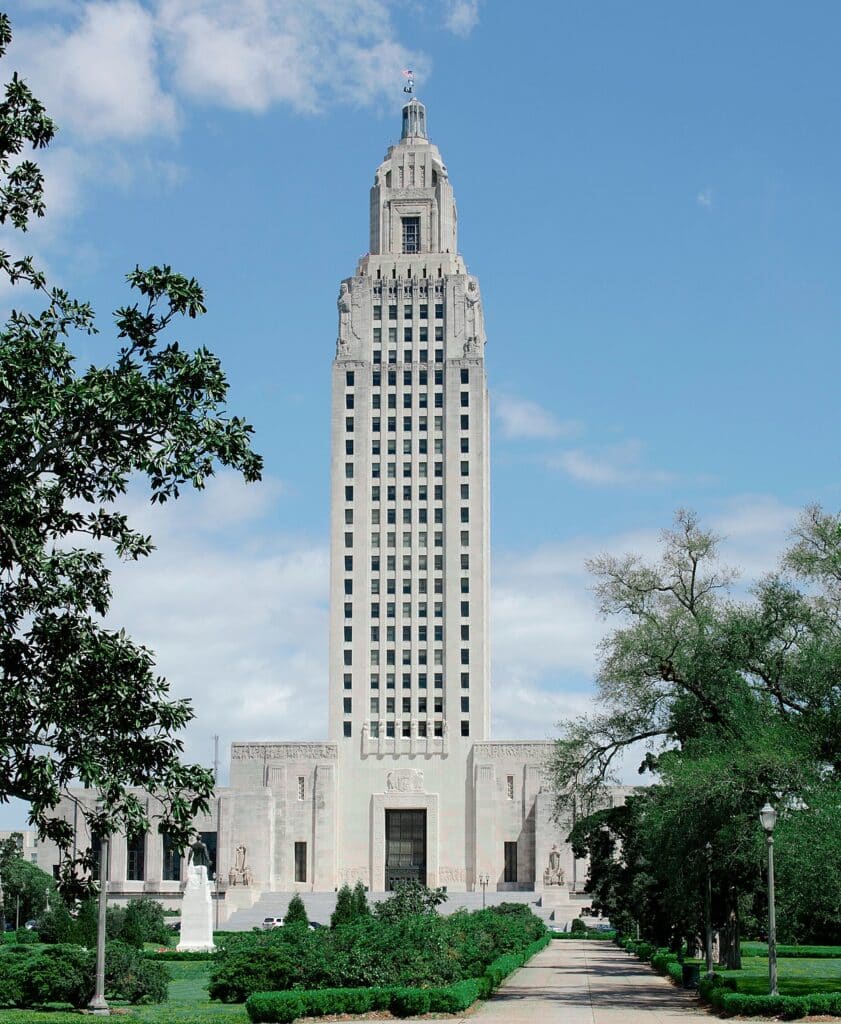
Culturally, Baton Rouge is a melting pot of influences, blending Cajun, Creole, and French heritage with modern Southern American culture. One of the city’s key cultural attractions is the Louisiana State Capitol, the tallest capitol building in the U.S., standing at 137 meters (450 feet). Baton Rouge is also home to several historical landmarks, including the Old State Capitol, a Gothic-style building that now serves as a museum, and Magnolia Mound Plantation, which offers a glimpse into Louisiana’s plantation history. The city celebrates its cultural diversity through numerous festivals, such as the Baton Rouge Blues Festival, which honors the city’s rich musical legacy, and the Louisiana Cajun-Zydeco Festival, which showcases traditional Cajun and Creole music.
Baton Rouge’s economy is deeply rooted in the energy and petrochemical sectors. The city is a major industrial hub, home to ExxonMobil’s Baton Rouge Refinery, one of the largest oil refineries in the world. Petrochemical production, oil refining, and shipping along the Mississippi River drive much of the local economy. Baton Rouge’s strategic position along the river allows it to serve as a major port for goods traveling in and out of the Gulf of Mexico. The Port of Greater Baton Rouge is one of the top 15 ports in the United States by tonnage, handling millions of tons of cargo each year.
While energy is the backbone of Baton Rouge’s economy, the city has diversified in recent years, with growth in industries such as technology, healthcare, and higher education. The presence of Louisiana State University (LSU), one of the largest universities in the southern U.S., has been a key factor in this shift. LSU’s enrollment of around 30,000 students, along with its research facilities, plays a crucial role in Baton Rouge’s economy, contributing to innovation in fields like agriculture, energy, and engineering. The university also brings a youthful energy to the city, with students, faculty, and researchers contributing to the local economy and cultural scene.
Human resources in Baton Rouge reflect the city’s balance between its industrial roots and emerging sectors like technology and healthcare. The city’s workforce is diverse, with many residents employed in energy, education, healthcare, and government services. Baton Rouge is also home to Southern University, the largest historically Black university in the United States, which plays an important role in shaping the city’s workforce by offering degrees in fields such as engineering, law, and business. The city’s unemployment rate hovers around the national average, but efforts to attract new industries and foster entrepreneurship are creating more job opportunities in emerging fields like tech and biosciences.
Despite its industrial backbone, Baton Rouge is known for its rich natural beauty and green spaces. The city’s sprawling parks, such as City Park and the LSU Lakes, offer locals and visitors plenty of outdoor recreational opportunities. The Bluebonnet Swamp Nature Center is another popular destination, where people can explore Louisiana’s wetlands and wildlife up close. Additionally, Baton Rouge’s riverfront area is a focal point for outdoor activities and events, with the Raising Cane’s River Center hosting concerts, conventions, and sports events.
Baton Rouge’s food scene is another aspect that truly sets the city apart. Like much of Louisiana, Baton Rouge is known for its delicious Cajun and Creole cuisine. You’ll find restaurants serving up classics like gumbo, jambalaya, crawfish étouffée, and po’boys, often with a modern twist. The city’s love for food is celebrated during events like the Baton Rouge Crawfish Festival, where locals and visitors gather to enjoy massive amounts of fresh crawfish and other local delicacies. In addition to its traditional fare, Baton Rouge has seen a rise in farm-to-table dining, with chefs focusing on locally sourced ingredients and innovative flavors.
In terms of infrastructure, Baton Rouge has a well-developed transportation network, with Interstate 10 and Interstate 12 serving as major highways that connect the city to New Orleans, Houston, and beyond. The city’s public transportation system, operated by the Capital Area Transit System (CATS), offers bus services throughout the metropolitan area, although like many U.S. cities, Baton Rouge is primarily a car-dependent city. Baton Rouge Metropolitan Airport provides regional and national flights, while the Port of Greater Baton Rouge plays a significant role in freight transportation.
Baton Rouge’s urban development has been focused on revitalizing its downtown area, with efforts to make the city more walkable and attract businesses, residents, and tourists. The downtown revitalization has led to the opening of new restaurants, bars, art galleries, and entertainment venues, breathing new life into the city center. Baton Rouge’s efforts to modernize its infrastructure while preserving its historical and cultural heritage are a key part of its ongoing transformation.
Tourism is another growing sector in Baton Rouge, thanks to its rich history, cultural attractions, and close proximity to New Orleans. Visitors to Baton Rouge can explore a wide range of attractions, from the USS Kidd, a World War II destroyer turned museum, to the vibrant downtown arts scene. The city’s role as the state capital also makes it a hub for political and civic tourism, with the Louisiana State Museum and the State Capitol building being popular stops.
In summary, Baton Rouge is a city that embodies the spirit of Louisiana: a place where history, culture, industry, and innovation come together. From its origins as a French trading post to its modern role as an industrial and educational powerhouse, Baton Rouge has continued to evolve while maintaining its deep cultural roots. Whether you’re strolling along the Mississippi River, enjoying some of the best Cajun cuisine in the South, or exploring its rich history, Baton Rouge offers a unique blend of Southern hospitality and vibrant urban life. With its growing economy, diverse workforce, and exciting cultural scene, Baton Rouge is a city on the rise, full of energy and opportunity.
Leave a Reply