

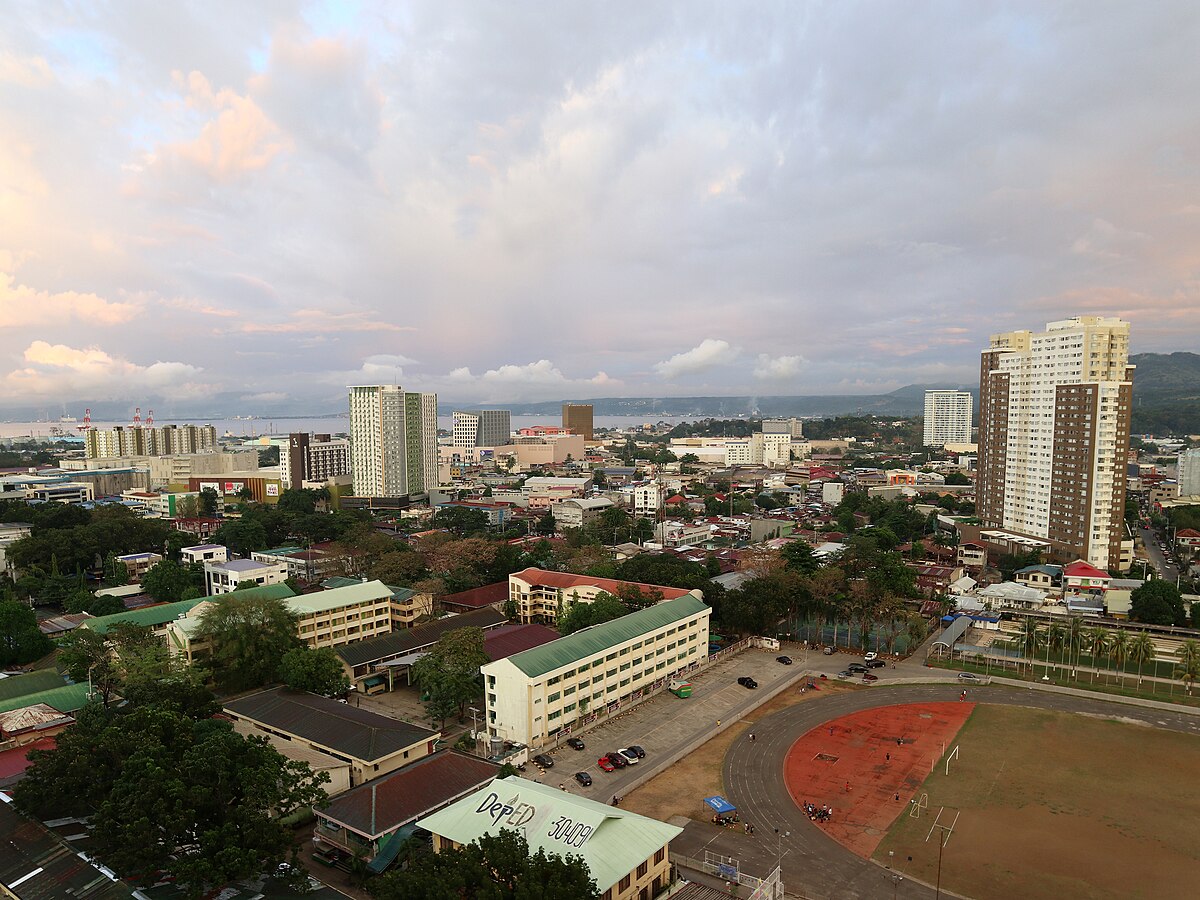
| Country | Philippines |
| Population | 728402 |
| Area | 412.80 km2 (159.38 sq mi) |
| Time Zone | UTC+08:00 (PST) |
| Coordinates | 8.483333333333333, 124.65 |
| Highest elevation | 428 m (1,404 ft) |
City Gallery




City Description
Cagayan de Oro, often referred to as CDO, is a bustling city located in the northern part of Mindanao, Philippines. As the capital of Misamis Oriental, Cagayan de Oro serves as the regional hub for trade, commerce, education, and tourism in Northern Mindanao. With a population of over 700,000 people, the city has experienced rapid growth over the years, making it one of the most dynamic urban centers in the region. Its strategic location, nestled between the Macajalar Bay to the north and the hinterlands to the south, has made it an important gateway for both domestic and international trade.
Historically, Cagayan de Oro was a small settlement, with early inhabitants being indigenous groups like the Higaonon and Talaandig tribes. The city was officially founded in 1622 by Spanish colonizers, who established it as a settlement and mission outpost. The Spanish influence on the city’s architecture and culture is still evident today in landmarks like the San Agustin Cathedral, which dates back to the 18th century. In the 20th century, Cagayan de Oro underwent significant urbanization and industrialization, especially during the American colonial period. The city was heavily impacted by World War II, suffering from destruction during the Japanese occupation, but it quickly recovered and continued to grow in the post-war years.
Geographically, Cagayan de Oro is known for its relatively flat landscape, which is bordered by rolling hills and mountains to the south. The city sits at an elevation of about 300 meters above sea level, providing it with a mild tropical climate. Its location near the sea means that it experiences a tropical rainforest climate with distinct wet and dry seasons. The dry season lasts from March to May, with temperatures peaking at around 34°C, while the rainy season runs from June to December, with an average annual rainfall of about 2,000 millimeters. This lush environment has given rise to fertile land suitable for agriculture, especially in the outskirts of the city, where crops like rice, corn, bananas, and coconut are grown.
Cagayan de Oro’s culture is a vibrant mix of traditions, influenced by indigenous practices, Spanish colonialism, and more recent global trends. The city is known for its warm and friendly people, and this is reflected in the local festivals and celebrations. One of the most notable events is the annual Kagay-an Festival, which takes place every August. This festival celebrates the city’s patron saint, St. Augustine, and features a grand street parade, cultural dances, and a showcase of local foods and crafts. The city is also known for its contributions to Filipino cuisine, including local delicacies like the famous “pasalubong” (souvenirs) of Cagayan de Oro, which includes sweets like “torta,” a rich cake made from local ingredients.
Human resources in Cagayan de Oro are diverse, with a growing number of skilled workers in various sectors. The city is home to several universities and colleges, including the Xavier University, which is known for its programs in engineering, business, and law. These educational institutions play a key role in providing a steady supply of skilled workers to local industries. In recent years, Cagayan de Oro has seen a rise in the number of young professionals, particularly in the fields of information technology, business process outsourcing (BPO), and healthcare. The local government has also invested in creating an environment conducive to entrepreneurship, with the establishment of business incubation centers and start-up hubs.
The economy of Cagayan de Oro is diverse, with several key sectors driving its growth. The city’s economy is primarily supported by trade, agriculture, manufacturing, and services. As the primary gateway to northern Mindanao, Cagayan de Oro is a key commercial hub, with a growing number of malls, supermarkets, and retail businesses. It has a highly competitive retail sector, with major local and international brands operating in the area. The city also has a large manufacturing base, particularly in products like furniture, processed food, and construction materials. Local industries benefit from Cagayan de Oro’s access to raw materials from the surrounding provinces, as well as its well-developed transportation infrastructure, which includes both sea and air connectivity.
Agriculture remains an important part of the city’s economy, especially in the rural areas surrounding Cagayan de Oro. The city is an important producer of agricultural products, such as rice, corn, coconut, and tropical fruits. The region is also known for its poultry and livestock farming, which supply the city’s food markets. Additionally, the fishing industry plays a key role in providing both local consumption and export opportunities. Cagayan de Oro’s location on the coast of Macajalar Bay means that seafood, particularly bangus (milkfish) and shrimp, is a key part of the city’s culinary identity.
Cagayan de Oro’s services sector has also been growing in recent years, especially in business process outsourcing (BPO) and information technology (IT). The city has become one of the most prominent BPO centers in Mindanao, with several call centers and IT companies setting up operations here. The local government has supported the growth of this sector by creating IT parks and offering incentives for businesses in the industry. As a result, Cagayan de Oro has attracted a steady influx of young professionals looking for work in the BPO industry. The growth of the IT and BPO industries has also had a positive impact on real estate, with the construction of new office buildings, hotels, and residential complexes.
The tourism sector is another important contributor to Cagayan de Oro’s economy. The city is known for its adventure tourism, with visitors flocking to the nearby white-water rafting and kayaking hotspots on the Cagayan de Oro River. The city also serves as a gateway for tourists heading to nearby destinations like the stunning white sand beaches of Camiguin and the picturesque Dahilayan in Bukidnon. In recent years, ecotourism has gained popularity, with the surrounding areas offering opportunities for hiking, zip-lining, and exploring the region’s waterfalls and wildlife.
Cagayan de Oro’s infrastructure has improved significantly over the past decade, with ongoing efforts to modernize the city and improve the quality of life for its residents. The city is connected by a network of roads, including the Laguindingan-Cagayan de Oro Coastal Road, which links Cagayan de Oro with neighboring towns and provinces. The Laguindingan International Airport, located about 45 minutes away from the city, serves as the primary gateway for both domestic and international flights. The city is also served by a busy seaport, which handles cargo shipments and inter-island travel.
While the city has experienced impressive growth, it faces challenges common to rapidly urbanizing cities in the Philippines, including traffic congestion, inadequate waste management, and poverty. However, the local government has been proactive in addressing these issues, implementing urban development plans aimed at improving transportation infrastructure, sanitation, and affordable housing.
Overall, Cagayan de Oro is a city on the rise, with a dynamic economy, a diverse cultural scene, and a bright future. Whether you’re drawn to its thriving BPO industry, its delicious local food, or its outdoor adventures, the city offers something for everyone. With ongoing investments in infrastructure and human resources, Cagayan de Oro is poised to continue its growth and development, making it a key player in the economic landscape of Mindanao and the Philippines.
Leave a Reply