

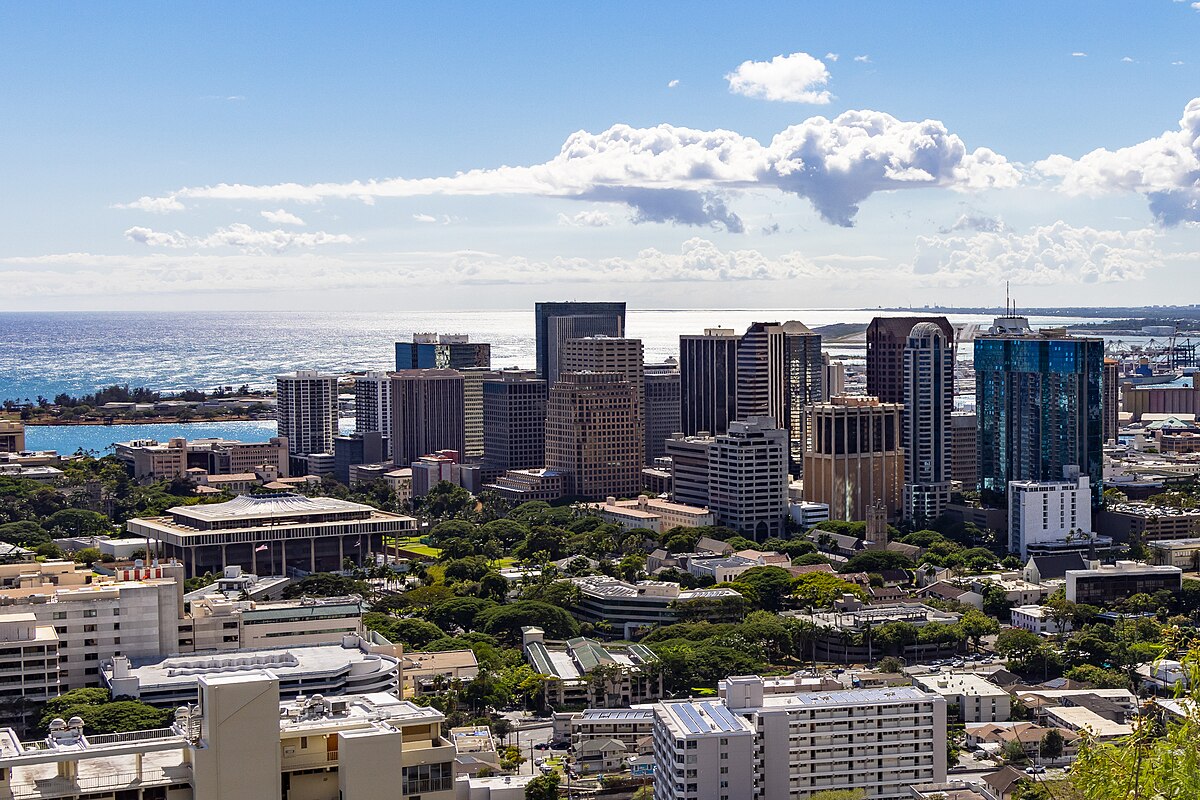
| Country | United States |
| Population | 808 |
| Area | 68.4 sq mi (177.2 km2) |
| Time Zone | UTC−10:00 (Hawaiian (HST)) |
| Coordinates | 21.306944444444444, -157.85833333333332 |
| Highest elevation | 16 ft (5 m) |
City Gallery




City Description
Honolulu, United States, is a paradise city filled with lush landscapes, cultural depth, and a laid-back yet vibrant lifestyle that has made it one of the world’s most iconic travel destinations. As the capital of Hawaii, Honolulu is located on the island of Oahu, the third-largest island in the Hawaiian archipelago. With a population of about 350,000, Honolulu serves as both the cultural and economic heart of Hawaii, blending an urban center with stunning beaches, volcanic landscapes, and rich Polynesian traditions. Known for its perfect tropical climate, iconic Waikiki Beach, and the lush backdrop of the Ko’olau Mountains, Honolulu embodies the spirit of Aloha and attracts millions of visitors annually.
Honolulu’s history stretches back over a thousand years, with the first Polynesian settlers arriving around 800 AD. These early settlers, known as Native Hawaiians, established an island society with unique customs, agriculture, and spirituality. By the late 1700s, Honolulu had become an important port for trade and a strategic military location. In the early 19th century, King Kamehameha I unified the Hawaiian Islands and established his court in Honolulu, marking it as the center of Hawaiian governance. By the time of the United States annexation in 1898, Honolulu was a bustling port, drawing traders, missionaries, and immigrants from around the globe. World War II further transformed Honolulu, especially with the attack on Pearl Harbor in 1941, which brought the U.S. into the war and permanently changed Honolulu’s landscape. Today, reminders of this complex history are everywhere, from historic Iolani Palace (the only royal palace in the U.S.) to the Pearl Harbor National Memorial, making Honolulu a city that honors its past while embracing modernity.
Geographically, Honolulu is a stunning blend of coastal beauty and mountainous terrain. The city stretches along the southeastern shores of Oahu and is flanked by the Ko’olau Mountain Range, which creates a breathtaking backdrop and a natural separation between the urban area and the island’s interior. Honolulu’s location in the Pacific Ocean means it has a tropical climate, with warm temperatures throughout the year averaging around 27°C (80°F), making it ideal for beachgoers and outdoor enthusiasts. Trade winds keep the air fresh, and rainfall is common in the winter months, especially in the lush, mountainous areas. The clear waters, coral reefs, and volcanic landscapes, including the iconic Diamond Head crater, make Honolulu a paradise for both residents and tourists, offering endless opportunities for hiking, snorkeling, and scenic views.
Culturally, Honolulu is incredibly diverse, reflecting a rich mix of Native Hawaiian, Asian, and American influences. Hawaiian traditions and the spirit of Aloha remain at the core of Honolulu’s culture, with hula dancing, ukulele music, and lei-making being essential parts of local celebrations. Honolulu is home to some of Hawaii’s most important cultural festivals, such as the annual Aloha Festivals in September, which showcase traditional Hawaiian music, dance, and crafts. The city’s Chinatown is one of the oldest in the United States, filled with markets, shops, and restaurants that celebrate the island’s strong Asian influence. Honolulu also has a thriving arts scene, with the Honolulu Museum of Art and Bishop Museum offering collections that delve into Hawaiian and Polynesian culture as well as global art. The city’s love for surfing, which originated in Hawaii centuries ago, makes it the global capital of surf culture, drawing surfers from all over the world to its legendary breaks.
The people of Honolulu, often called “kama’aina” (locals), are known for their warmth, laid-back attitude, and commitment to the land, or “aina,” a central part of Hawaiian culture. Honolulu’s population is a melting pot, with significant numbers of Native Hawaiians, Japanese, Filipino, and Chinese communities. Many residents are bilingual, speaking both English and Hawaiian, Japanese, or Tagalog, reflecting the cultural diversity of the city. Family and community are central to life in Honolulu, with many residents working in tourism, healthcare, and education. Honolulu’s University of Hawaii at Manoa brings a youthful energy to the city, with students and academics contributing to Honolulu’s growing research and technology sectors. The people of Honolulu take pride in their connection to the environment and often engage in conservation efforts to protect Hawaii’s natural beauty, coral reefs, and marine life.
Economically, Honolulu’s economy is driven by tourism, military defense, and a growing technology sector. Tourism is by far the biggest industry, with over 10 million visitors to Hawaii annually, many of whom stay in Honolulu’s hotels, dine in local restaurants, and participate in tours and excursions. The city’s iconic Waikiki Beach alone brings in billions of dollars each year, supporting countless jobs in hospitality, retail, and recreation. The military is another significant presence, with several bases around Honolulu, including Pearl Harbor, which provides defense jobs and boosts the local economy. Healthcare and education are also strong sectors, with Honolulu’s major hospitals and universities attracting professionals and students. The tech sector, though smaller, is on the rise, with companies focusing on sustainability, marine science, and renewable energy. Honolulu’s economy has grown to balance its tourism-dependent base with these emerging industries, creating a diverse and resilient local economy.
Transportation in Honolulu is well-developed, especially given its island geography. Honolulu International Airport (officially known as Daniel K. Inouye International Airport) is the main gateway to Hawaii, connecting Oahu with major cities in the U.S., Asia, and the Pacific. Within Honolulu, TheBus, the city’s public transportation system, is efficient and popular, providing affordable routes across the island, from Waikiki to North Shore beaches. Honolulu is also working on the Honolulu Rail Transit Project, an elevated rail system set to ease traffic congestion and improve public transit options across the city, although the project has faced delays. Many residents prefer to travel by car, with a network of highways and scenic drives, such as the H-1 and H-3 highways, offering stunning views of the island. For those who enjoy biking or walking, Honolulu’s compact layout and beautiful streets make it a pedestrian-friendly city, especially around Waikiki and downtown.
Housing in Honolulu varies from high-rise apartments in Waikiki to suburban homes in neighborhoods like Manoa and Hawaii Kai. Honolulu’s real estate market is among the most expensive in the United States, driven by high demand, limited space, and a desirable location. In the heart of the city, high-rise condos offer stunning ocean views and access to amenities, attracting professionals and retirees. Family-friendly neighborhoods like Kailua and Kaneohe on Oahu’s Windward side provide more spacious homes with a quieter, community-focused atmosphere, though prices remain high. In recent years, luxury developments have sprung up in areas like Ala Moana, providing upscale living options with shopping, dining, and beach access. The city’s housing market is competitive, and the cost of living is high, but Honolulu’s natural beauty, job opportunities, and lifestyle continue to attract new residents.
Entertainment and recreation in Honolulu are endless, with options ranging from beach days and outdoor adventures to cultural and historical experiences. Waikiki Beach is one of the top attractions, famous for its golden sands, surfing spots, and lively nightlife, with beachfront bars, restaurants, and shopping. For history lovers, Pearl Harbor is a must-visit, with memorials like the USS Arizona Memorial and the Pacific Aviation Museum providing insights into World War II history. Nature enthusiasts flock to Diamond Head, a volcanic crater offering panoramic views of Honolulu and the Pacific Ocean after a moderate hike. The North Shore, just a short drive away, is world-famous for its surfing waves and competitions, particularly in the winter when the waves are at their peak. For a quieter escape, the Honolulu Botanical Gardens and Hanauma Bay Nature Preserve offer beautiful landscapes and snorkeling spots where you can explore Hawaii’s rich marine life.
The food scene in Honolulu is a delightful mix of traditional Hawaiian cuisine, Asian influences, and modern fusion. Local favorites include poke (raw, marinated fish served over rice), loco moco (a comfort dish of rice, hamburger patty, fried egg, and gravy), and plate lunches featuring dishes like teriyaki chicken, kalua pork, and macaroni salad. Honolulu’s farmers’ markets, like the KCC Farmers Market near Diamond Head, showcase the best of Hawaii’s produce, including tropical fruits like mango, papaya, and pineapple. Honolulu’s Chinatown is a haven for foodies, with its vibrant mix of Chinese, Japanese, Filipino, and Vietnamese flavors in restaurants and food stalls. Upscale restaurants in Waikiki and Ala Moana serve everything from sushi and fresh seafood to gourmet Hawaiian dishes, while food trucks around the island offer casual, affordable options like garlic shrimp and Hawaiian shave ice.
In recent years, Honolulu has emphasized sustainability and conservation to protect its unique environment and resources. Programs focused on coral reef preservation, sustainable fishing, and waste reduction have become priorities, with local organizations and the government working together to ensure Honolulu’s natural beauty endures. The city has also embraced renewable energy, with a strong commitment to solar power and a goal to achieve 100% renewable energy by 2045. Efforts to maintain beach cleanliness, control tourism impact, and protect indigenous wildlife reflect Honolulu’s dedication to preserving its environment. Community-led initiatives, such as beach cleanups and tree-planting events, show the active role residents play in these efforts.
Honolulu is a city that’s as vibrant as it is serene, offering an ideal mix of beachside relaxation, cultural depth, and urban excitement. From the iconic views atop Diamond Head to the historic halls of Iolani Palace and the bustling energy of Waikiki, Honolulu is a place that enchants everyone who visits. It’s a city where the Aloha spirit is alive, where the ocean and mountains are never far away, and where every sunset seems to paint a new masterpiece over the Pacific. Honolulu’s allure goes beyond its beauty—it’s a lifestyle, a community, and a piece of paradise that captures the heart of anyone lucky enough to experience it.
Leave a Reply