

| Country | Russian Federation |
| Population | 547904 |
| Area | None |
| Time Zone | UTC+7 (MSK+4 [7]) |
| Coordinates | 53.7557, 87.1099 |
| Highest elevation | 190 m (620 ft) |
City Gallery




City Description
Novokuznetsk, a dynamic city in Kemerovo Oblast (Kuzbass) in southwestern Siberia, Russia, is the second-largest city in the region, following the administrative center, Kemerovo. As of the 2021 Census, Novokuznetsk has a population of 537,480, reflecting a slight decline from previous decades, with 547,904 recorded in the 2010 Census and 599,947 in the 1989 Soviet Census.
Novokuznetsk’s history dates back to its founding in 1618 as Kuznetsk, later renamed Stalinsk in 1931 in honor of Joseph Stalin, and finally adopting its current name in 1961. The city’s name, meaning ‘new smith’s,’ reflects its deep-rooted industrial heritage. Novokuznetsk became a significant metallurgical center, especially during the Soviet era, when it played a crucial role in the industrialization of the region.
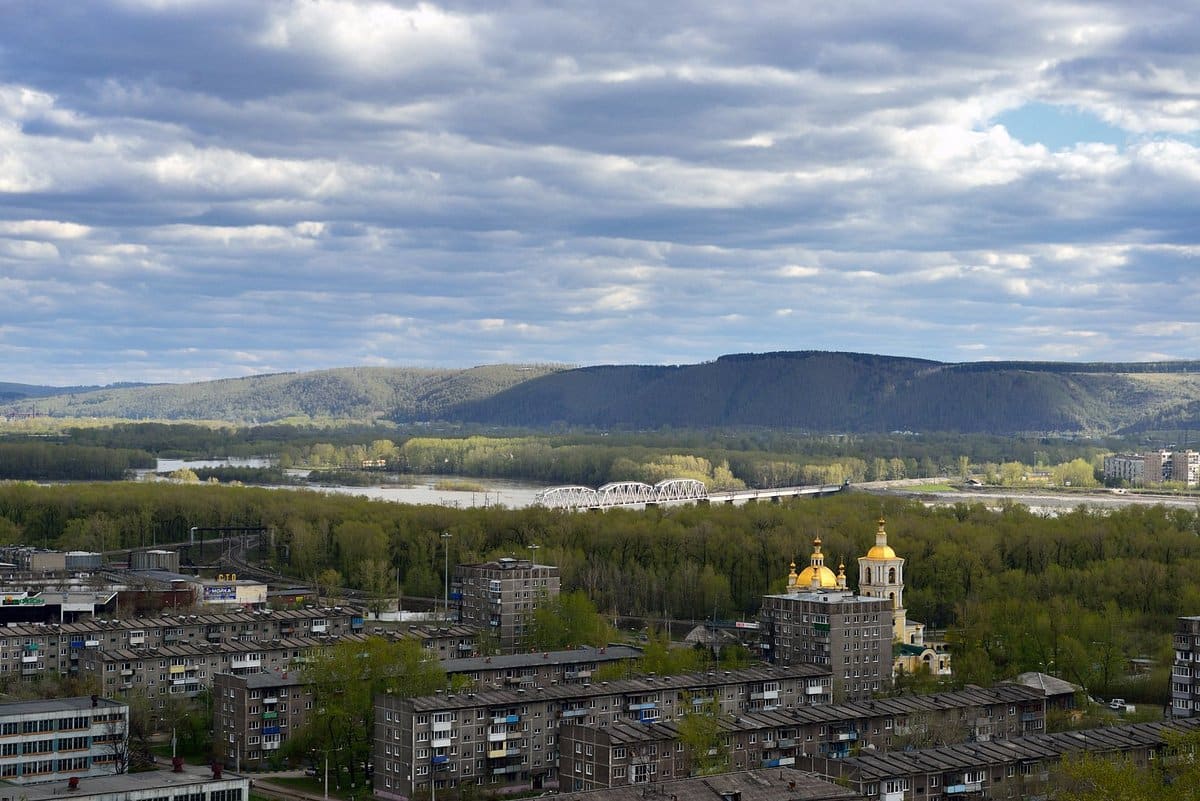
Geographically, Novokuznetsk is located in the Kuznetsk Basin, an area rich in coal and mineral resources. This strategic location has greatly influenced its development as an industrial hub. The city lies along the Tom River, a tributary of the Ob River, which has historically facilitated transportation and trade.
Culturally, Novokuznetsk offers a blend of historical and modern influences. The city boasts several cultural institutions, including theaters, museums, and libraries. The Novokuznetsk Drama Theatre, established in 1931, is one of the oldest and most prominent cultural landmarks. The city also hosts numerous cultural festivals and events, reflecting its vibrant community life.
Novokuznetsk’s human resources are characterized by a skilled workforce, particularly in the metallurgical and coal industries. The city’s educational institutions, including Novokuznetsk State Institute of Further Training (part of the Siberian Federal University), play a significant role in providing higher education and vocational training, supporting the local economy.
Economically, Novokuznetsk is a major player in the metallurgical and coal mining industries. The city’s industrial landscape is dominated by large enterprises such as the West-Siberian Metallurgical Plant (part of Evraz Group) and the Novokuznetsk Aluminum Plant. These industries drive the local economy, providing employment and contributing significantly to the region’s GDP.
Novokuznetsk’s urban infrastructure includes well-developed transportation networks, with railway lines connecting it to other major cities in Russia. The city also has a public transportation system comprising buses, trams, and trolleybuses, facilitating mobility for its residents.
In summary, Novokuznetsk is a city of significant historical, cultural, and economic importance in southwestern Siberia. Its rich industrial heritage, strategic geographical location, and vibrant cultural scene make it a key urban center in the Kemerovo Oblast. With a strong industrial base and a skilled workforce, Novokuznetsk continues to play a vital role in Russia’s industrial landscape.
Leave a Reply