

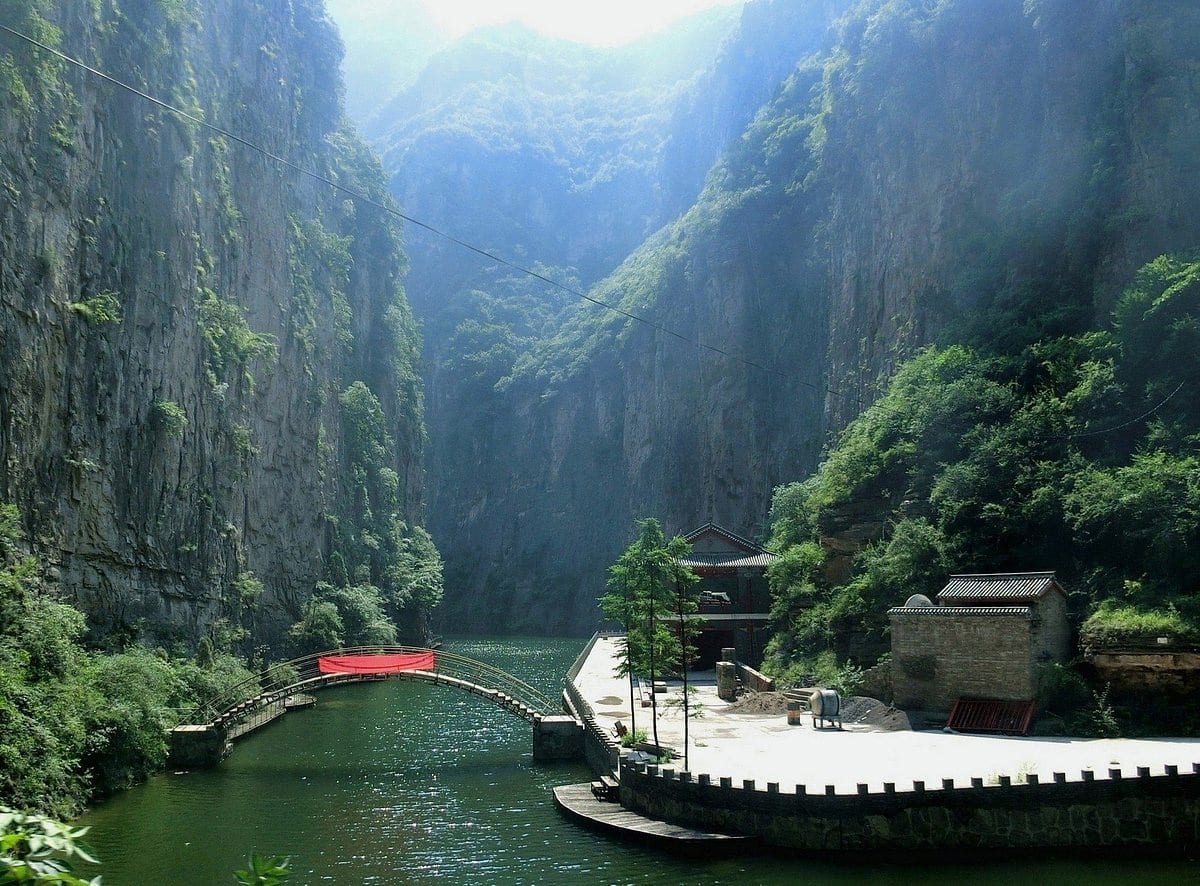
| Country | China |
| Population | 5305061 |
| Area | 6,959 km2 (2,687 sq mi) |
| Time Zone | UTC+08:00 (China Standard) |
| Coordinates | 37.86944, 112.56028 |
| Highest elevation | 800 m (2,600 ft) |
City Gallery




City Description
Taiyuan, the capital and largest city of Shanxi Province in northern China, serves as the political, economic, cultural, and international exchange hub of the region. With a sprawling area of 6,988 square kilometers and a population of approximately 5.4 million as of 2021, Taiyuan is the heart of Shanxi, often referred to as “Dragon City” due to its historical significance as the capital of several Chinese dynasties.
Geographically, Taiyuan is positioned in the central part of Shanxi Province, with the Fen River flowing through its core. This location places it strategically within the North China Plain, contributing to its status as a major industrial and economic center. The city enjoys a warm temperate continental monsoon climate, characterized by long, cold winters, hot and humid summers, and distinct wet and dry seasons.
Taiyuan’s historical background is deeply rooted in its role as a political capital. It has served as the capital or provisional capital for various Chinese dynasties, which has endowed it with a rich historical legacy. This heritage is evident in the city’s numerous ancient sites and cultural landmarks.
The city is a significant industrial base, particularly known for its energy and heavy chemical industries. Taiyuan has evolved into a key player in China’s industrial sector, contributing substantially to the nation’s energy production and heavy chemical manufacturing. Its economy benefits from this industrial focus, but it also engages in various other sectors, including technology and services.
In terms of education and human resources, Taiyuan is home to several universities and research institutions, including Shanxi University, which plays a crucial role in regional development and innovation. The city’s educational institutions contribute to a skilled workforce that supports its diverse industrial activities.
Culturally, Taiyuan is known for its rich historical sites and traditional architecture. The city’s cultural landscape is shaped by its long history and diverse heritage, including ancient temples and historical buildings that attract visitors and scholars alike.
Overall, Taiyuan represents a dynamic blend of historical significance and modern industrial prowess, making it a pivotal city in China’s northern region. Its strategic location, economic vitality, and cultural richness make it a prominent player on the national stage.
Leave a Reply