

| Country | Germany |
| Population | 283083 |
| Area | 203.9 km2 (78.7 sq mi) |
| Time Zone | UTC+01:00 (CET) |
| Coordinates | 50.0825, 8.239999999999998 |
| Highest elevation | 115 m (377 ft) |
City Gallery




City Description
Wiesbaden, the elegant capital of the state of Hesse, is a city that blends history, luxury, and a natural spa tradition dating back thousands of years. Located in the heart of Germany, Wiesbaden is home to around 280,000 residents, making it one of the most populous cities in Hesse. Known as one of Europe’s oldest spa towns, it has attracted visitors since Roman times, offering thermal baths, beautiful parks, and a sophisticated urban landscape. Just 40 kilometers from Frankfurt, Wiesbaden is strategically situated on the northern bank of the Rhine River and is one of Germany’s wealthiest cities, balancing traditional charm with modern prosperity.
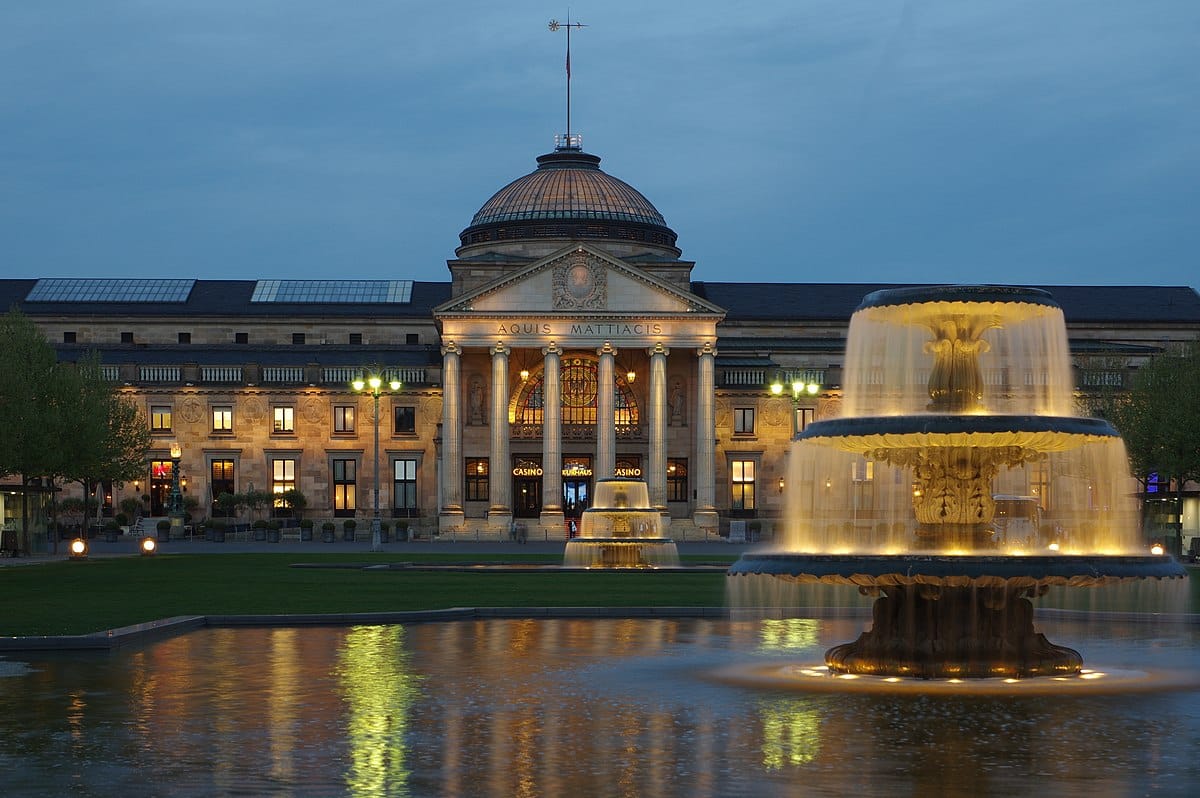
Wiesbaden’s history is steeped in the healing properties of its hot springs. Archaeological finds date the use of its mineral-rich waters back to the Romans, who established Aquae Mattiacorum around 6 AD, named for the local Mattiaci tribe. The city’s reputation as a spa destination grew significantly in the 19th century when it became a favored retreat for European nobility, writers, and artists. Russian writer Fyodor Dostoevsky, German poet Johann Wolfgang von Goethe, and composer Richard Wagner all visited Wiesbaden, drawn to its serene atmosphere. The 19th century saw the construction of grand buildings, from the Kurhaus, a stately spa house with stunning neoclassical architecture, to elaborate villas lining the leafy streets. Although Wiesbaden endured damage during World War II, much of its historical architecture survived, lending the city an old-world charm.
Geographically, Wiesbaden covers an area of around 204 square kilometers and is surrounded by the Taunus Mountains, giving it a natural backdrop that complements its elegant urban center. The city’s moderate, oceanic climate is influenced by its position along the Rhine River and shielded from harsh weather by the mountains. The average annual temperature hovers around 11°C, with warm summers and mild winters, making Wiesbaden pleasant to visit and live in year-round. Wiesbaden’s parks and green spaces, such as the Biebrich Palace Gardens and the Spa Gardens (Kurpark), enhance its reputation as a scenic city with plenty of outdoor leisure options.
Culturally, Wiesbaden is a mix of refined German tradition and a global vibe due to its proximity to Frankfurt and its position as a regional capital. The city’s annual events highlight this blend— the Rheingau Wine Festival, held in August, celebrates the region’s acclaimed Riesling wines with stalls stretching across the Schlossplatz, and the Biennale for Contemporary Art attracts modern art lovers from all over. Wiesbaden also hosts a highly regarded international film festival, exground, which showcases a diverse range of independent films. The Hessian State Theatre, a grand building dating back to 1894, remains a cornerstone of Wiesbaden’s cultural life, offering ballet, opera, and theater performances in a luxurious setting. The city is home to a sizable expatriate community, including many Americans due to the US military presence at Clay Kaserne, adding to the international flavor of its festivals, restaurants, and social events.
The city’s human resources are bolstered by a well-educated workforce, with strong sectors in finance, healthcare, media, and public administration. Wiesbaden’s proximity to Frankfurt has contributed to the growth of a skilled labor pool, with many residents commuting to the financial center while others work in local companies. Wiesbaden also has a robust educational infrastructure, including the Wiesbaden Business School and several technical colleges, which supply graduates with expertise in business, technology, and health sciences. Additionally, Wiesbaden benefits from strong public services, including healthcare, which supports the city’s growing population and aging residents alike. The German Red Cross and various research institutions based here provide ample employment and contribute to the city’s reputation as a hub for health and wellness.
Economically, Wiesbaden has a prosperous and diverse economy, with finance, health, and public administration among its primary sectors. The city is also known for its publishing industry, with several prominent publishers headquartered here. Wiesbaden’s status as the state capital means many government institutions are based in the city, providing stable employment for public sector workers. The city’s unemployment rate remains low, typically around 4%, lower than the national average, thanks to its thriving business environment and regional connectivity. While traditional industries like wine production and spa tourism still play a role, Wiesbaden has diversified significantly over recent decades, with investments in technology and media.
The city’s real estate is among the most desirable in Germany, especially in the districts of Sonnenberg and Bierstadt, where grand villas and modern apartments attract affluent residents. Housing demand remains high, and Wiesbaden’s development plans aim to preserve its green spaces while accommodating new residents. Wiesbaden’s location along major transportation routes and proximity to Frankfurt Airport, only a 20-minute drive away, makes it an attractive option for professionals seeking a quieter lifestyle close to the bustling financial center of Frankfurt.
Wiesbaden’s residents enjoy a high standard of living, with access to upscale shopping districts, fine dining, and numerous recreational activities. From exploring the Neroberg, a hillside park with sweeping views over the city, to relaxing at the Kaiser-Friedrich-Therme, an opulent bathhouse built in the style of Roman baths, Wiesbaden’s leisure offerings are abundant. The city is also a favorite spot for wine lovers, being at the gateway to the Rheingau wine region, famous for its Rieslings. The city’s location in wine country means local restaurants offer an exceptional selection of wines, complemented by a mix of traditional German dishes and international cuisine.
Wiesbaden’s modern side is also evident in its commitment to sustainability. The city has numerous green initiatives, including energy-efficient public transportation, bike-sharing programs, and a city-wide push to reduce emissions. The local government has also invested in eco-friendly urban planning, creating more pedestrian zones and integrating green spaces throughout the city. Wiesbaden’s extensive parks and tree-lined streets give it a green, serene atmosphere that aligns with its reputation as a spa city, where health and well-being are prioritized.
Overall, Wiesbaden is a blend of old and new, elegance and innovation. Its grand architecture, natural beauty, and rich cultural life make it a place that appeals to both visitors and residents looking for a refined yet vibrant environment. With its historical roots as a spa destination, modern amenities, and thriving economy, Wiesbaden remains one of Germany’s most appealing cities, offering a unique lifestyle where wellness and tradition meet the energy of modern city life. Whether you’re soaking in its thermal waters, strolling through its parks, or enjoying a glass of Riesling in a charming café, Wiesbaden captures the essence of a German city that values quality of life above all else.
Leave a Reply